Resin OverlaysPotters Bar & North LondonRefresh Existing Surfaces Without a Full Rebuild
A resin overlay refreshes a tired concrete, tarmac or slabbed surface with a smooth, weed-free resin finish, without the cost and disruption of full excavation. John Quinn's team checks the base is genuinely sound first, so the new surface bonds properly and doesn't crack or lift within the first winter.
Rated 5.0 on Google · family-run in Potters Bar since 2013
Est. 2013
Trading in Potters Bar for over a decade
25+ years
Hands-on groundwork and construction experience
5.0 rating
On our Google Business Profile
Family-run
John and Amy Quinn, not a call centre
Available 24/7
Call any day and speak to the people doing the work
Overview
What A Resin Overlay Is
A resin overlay bonds a thin layer of resin-bound aggregate directly onto an existing hard surface, usually concrete, tarmac or well-laid slabs, using a primer to key the resin to the base beneath. It transforms a dated, stained or faded surface into a smooth, consistent finish without the excavation and sub-base work a full new-build resin driveway needs.
It suits homeowners with a structurally sound but visually tired driveway or patio, landlords refreshing a property between tenancies, and anyone wanting the look and low maintenance of resin surfacing without the cost of ripping out a perfectly serviceable base. It's not the right answer for a base that's already cracked, sunk or holding water; that needs proper groundwork, not a surface treatment.
The overlay only performs as well as what's underneath it. Priming and bonding resin onto a cracked or contaminated surface simply telegraphs those defects through to the new layer within a season. Assessing the existing base honestly before recommending an overlay, rather than selling one regardless, is what makes the difference between a job that lasts and one that needs redoing.
No full excavation needed
Where the existing base is sound, an overlay avoids digging out and re-laying a new sub-base, cutting both cost and disruption significantly.
Transforms tired surfaces
Stained, faded or patchy concrete and tarmac can be brought back to a clean, even, modern finish in a fraction of the time a full rebuild takes.
Same low-maintenance benefits
Once bonded, an overlay behaves like any resin surface: no weeding, no loose stone, and an easy sweep or wash to keep it looking right.
What happens if it waits
Where Overlays Fail
Overlay failures almost always come down to one thing: applying resin to a base that wasn't actually suitable for it. A rushed assessment, poor priming, or ignoring existing cracks and damp will show up fast once the resin is down and traffic starts using the surface again.
Cracks telegraphing through
Any crack or joint movement in the base beneath will usually reappear in the resin layer above within months, because the overlay simply follows the surface it's bonded to.
Poor adhesion and lifting
Skipping proper cleaning, degreasing and priming before laying leaves weak spots where the resin doesn't bond, leading to lifting or peeling at edges and high-traffic points.
Trapped moisture underneath
Sealing resin over a damp or poorly drained base traps water beneath the surface, which can freeze, expand and push the overlay away from the base it's bonded to.
Common mistakes we get called out to fix
- Recommending an overlay on a base that's already cracked or sunk in places
- Skipping pressure washing and degreasing before priming
- Using the wrong primer for the base material: concrete, tarmac and block paving all need different approaches
- Ignoring existing drainage falls, so problems just get resurfaced rather than fixed
- Applying resin too thin to properly encapsulate the aggregate
- Working in unsuitable weather, leaving the bond compromised before it's fully cured
Our process
How the job
actually runs
The same sequence on every job, with one point of contact from the first site visit to the final sweep down.
- 01
Base assessment
We check the existing surface for cracking, movement, drainage issues and contamination to confirm an overlay is actually the right fix, not a full rebuild.
- 02
Cleaning and preparation
The surface is pressure washed and degreased to remove moss, oil, dirt and loose material so the primer can bond properly.
- 03
Repairs to the base
Any minor cracks, small dips or loose edges in the existing surface are repaired before resin goes down, so they don't reappear through the new finish.
- 04
Priming
A bonding primer suited to the base material, concrete, tarmac or block paving, is applied to key the resin layer securely to the surface beneath.
- 05
Resin application
Aggregate and resin are mixed and trowelled on at the correct thickness to fully encapsulate the stone and give an even, durable finish.
- 06
Curing and check
The overlay is left to cure, then checked for consistent bonding, even colour and correct drainage before it's signed off as complete.
Benefits
What you get for
the money you spend
Faster than a full rebuild
Most overlay jobs finish in one to three days since there's no excavation or sub-base work, compared to several days for a full resin driveway.
Genuinely durable when the base is right
Properly primed and bonded resin on a sound base holds up to years of daily traffic without lifting, peeling or fading unevenly.
Avoids unnecessary excavation cost
Where the base is structurally sound, an overlay sidesteps the cost of digging out and rebuilding a sub-base that didn't need replacing.
Honest assessment first
We check the base condition properly before recommending an overlay, rather than laying resin over problems that will just resurface later.
Improves drainage and appearance together
A well-laid overlay smooths out surface irregularities and can be finished with falls that direct water away rather than letting it pool.
One team for base repair and resin
The same crew handles any base repairs and the resin application, so there's no handover gap where quality standards slip.
In detail
Materials, Base Types and When An Overlay Makes Sense
An overlay isn't a universal fix; it depends heavily on what's underneath. Understanding the base material, its condition, and the setting it's in determines whether an overlay is the right call or whether full groundwork is needed instead.
Overlaying concrete
Concrete is generally the most straightforward base for an overlay, provided it's not cracked, spalling or holding water in low spots. A sound concrete slab gives resin a stable, flat surface to bond to, and with the right primer the two layers key together well.
Where concrete has hairline cracking from age or minor settlement, we'll usually address those areas first with a suitable repair before priming, since resin laid straight over active cracks will crack again in the same place, just above a new resin layer instead of bare concrete.
Overlaying tarmac
Tarmac driveways that have faded, gone patchy or picked up oil staining are common overlay candidates, since the base itself is often structurally fine even when it looks tired. Tarmac needs a different primer approach to concrete because of its oil content and slightly more flexible surface.
Where tarmac has significant rutting, potholing or edge breakdown, that's usually a sign the sub-base beneath has failed, and an overlay would only mask the problem temporarily. In those cases we'll recommend proper groundwork rather than resurfacing over a failing base.
Overlaying block paving and slabs
Block paving and slabbed patios can take an overlay if the individual units are stable and not rocking, though joints need particular attention during priming to avoid resin pooling unevenly in the gaps between blocks or slabs.
If blocks have sunk, shifted or the jointing sand has washed out significantly, those movement issues need addressing first; an overlay bonded across unstable individual units will crack along every joint as they continue to move independently underneath.
Residential refreshes versus commercial forecourts
Most overlay work we do is residential: driveways and patios that have aged but are structurally sound, where homeowners want the resin look without a full rebuild. Colour choice and finish texture are usually the main decisions here.
Commercial forecourts and shared access areas can also take an overlay approach, though we look more closely at wear patterns from repeated vehicle turning and heavier footfall, sometimes specifying a slightly thicker resin application in high-wear zones to extend the life of the finish.
Related services
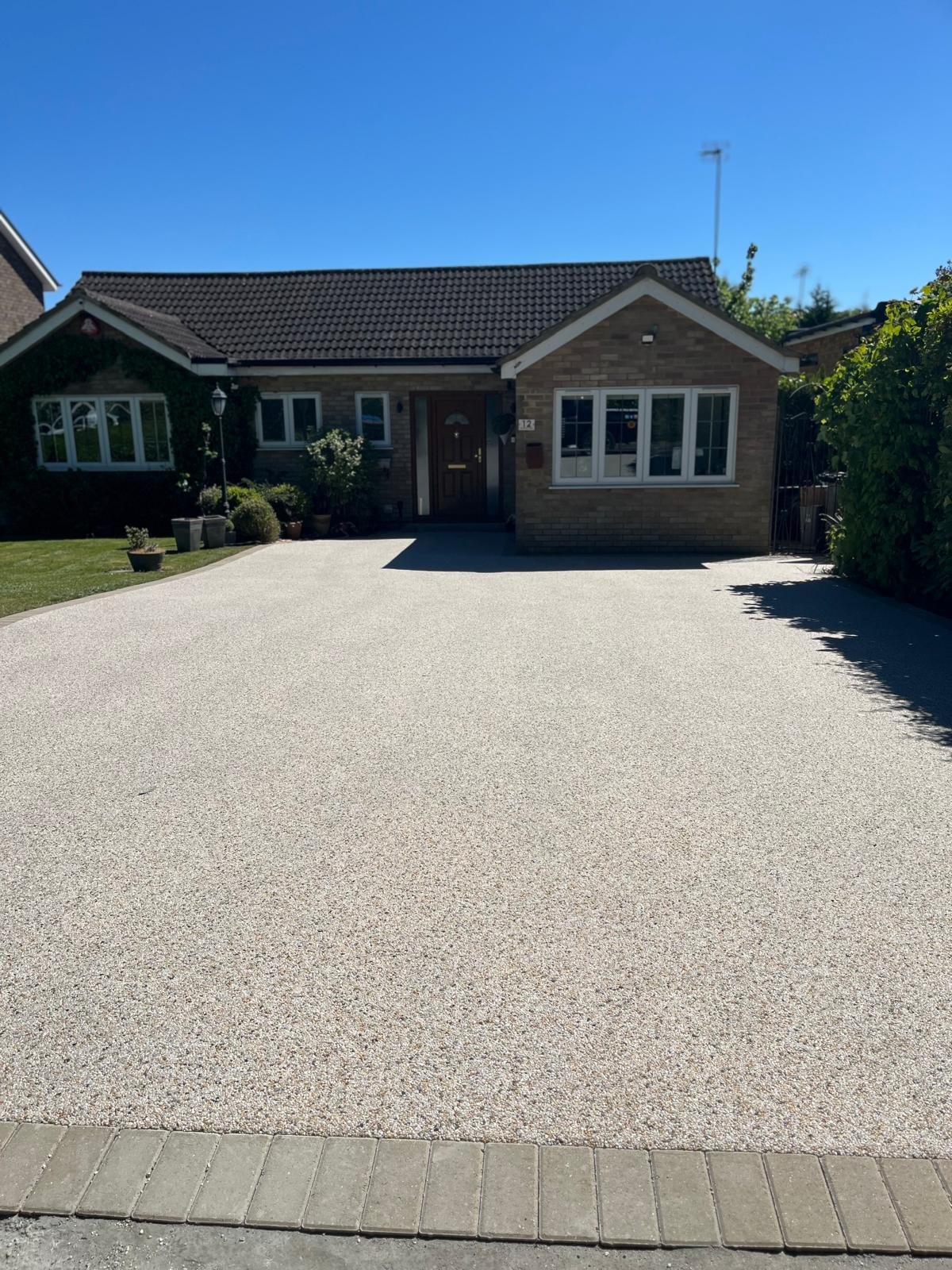
Resin Bound Driveways
Permeable, seamless and built on a properly excavated, drained base, not laid over guesswork.
Read more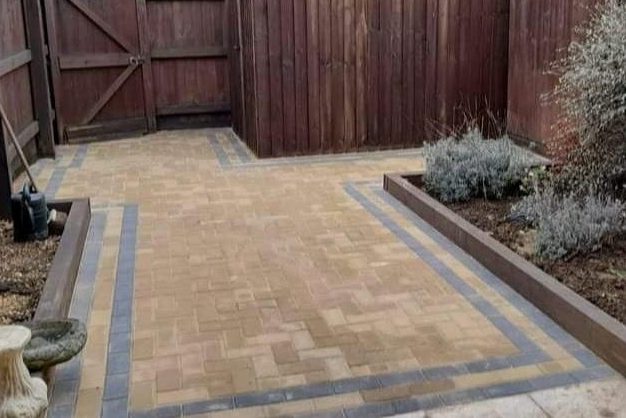
Block Paving
Traditional, hard-wearing driveways laid to correct falls with proper edge restraints.
Read more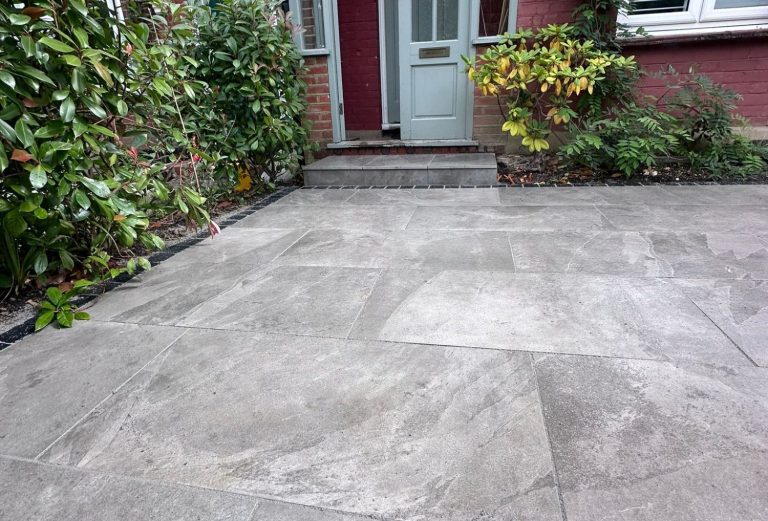
Patios
Porcelain, natural stone and paving laid level, tidy and made to last.
Read more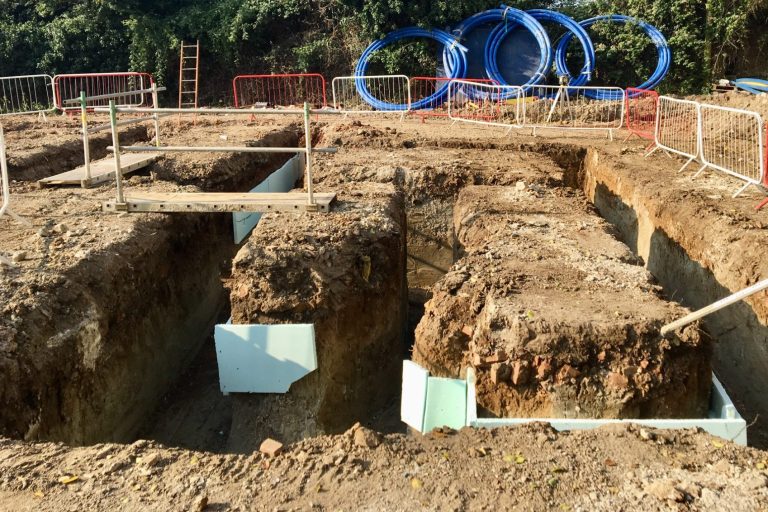
Groundworks
Excavation, muck away, sub-bases and site preparation for homeowners and builders.
Read moreResin Overlays across our service areas
- Resin Overlays in Potters Bar
- Resin Overlays in Brookmans Park
- Resin Overlays in Hadley Wood
- Resin Overlays in Cuffley
- Resin Overlays in Cockfosters
- Resin Overlays in Totteridge
- Resin Overlays in Whetstone
- Resin Overlays in Mill Hill
- Resin Overlays in Barnet
Based in Potters Bar, working across south Hertfordshire and north London. See all our services or get in touch.
Common questions
Answers before
you call
- How much does a resin overlay cost?
- It depends on the size of the area, the condition of the existing base and how much repair work it needs before resin goes down. We assess this at a site visit rather than quoting without seeing the surface, since base condition drives most of the cost.
- How long does a resin overlay take?
- Most domestic overlay jobs take one to three days from cleaning and priming through to a fully cured surface, depending on the size of the area and any base repairs needed first.
- Can any surface be overlaid with resin?
- No. The base needs to be structurally sound, without significant cracking, sinking or drainage failure. We check this properly first: if the base has failed, an overlay just masks the problem rather than fixing it.
- How long does a resin overlay last?
- On a sound, well-prepared base, an overlay can last well over a decade. Lifespan depends almost entirely on the condition of the surface it's bonded to and how thoroughly it was cleaned and primed beforehand.
- Will cracks in my old driveway show through the overlay?
- If they're not repaired first, yes: cracks in the base typically reappear in the resin layer above within a season or two. We repair any significant cracking before priming to avoid this.
- Does an overlay need much maintenance?
- Very little, similar to a full resin driveway. An occasional sweep or pressure wash keeps it clean, with no weeding or re-sanding required.
- Do you offer overlays in Hadley Wood, Cockfosters and Totteridge?
- Yes, alongside Potters Bar we cover Hadley Wood, Cockfosters, Totteridge, Whetstone, Mill Hill, Barnet, Brookmans Park and Cuffley for resin overlay and driveway work.
- Can I call for a quote outside office hours?
- Yes, we're available 24 hours a day, seven days a week to discuss the job and arrange a site visit to check whether an overlay or a full rebuild is the right approach for your surface.
- What's the difference between an overlay and a full resin driveway?
- A full resin driveway involves excavating and laying a new permeable sub-base before resin goes down. An overlay bonds resin directly onto an existing sound surface, skipping excavation, which is faster and less disruptive where the base doesn't need replacing.
- Will you tell me if my driveway actually needs a full rebuild instead?
- Yes. We check the base honestly at the site visit and will recommend proper groundwork rather than an overlay if the existing surface is cracked, sunk or draining badly, since an overlay wouldn't hold up in those conditions.
Tired Driveway, Sound Base?Let's Talk Resin Overlays
Call John Ruben Ltd for an honest look at whether a resin overlay will work on your driveway or patio. Available 24/7 to arrange a site visit and give a straight answer either way.
Established 2013 · 25+ years’ experience · 5.0 rated on Google · family-run · available 24 hours, 7 days