
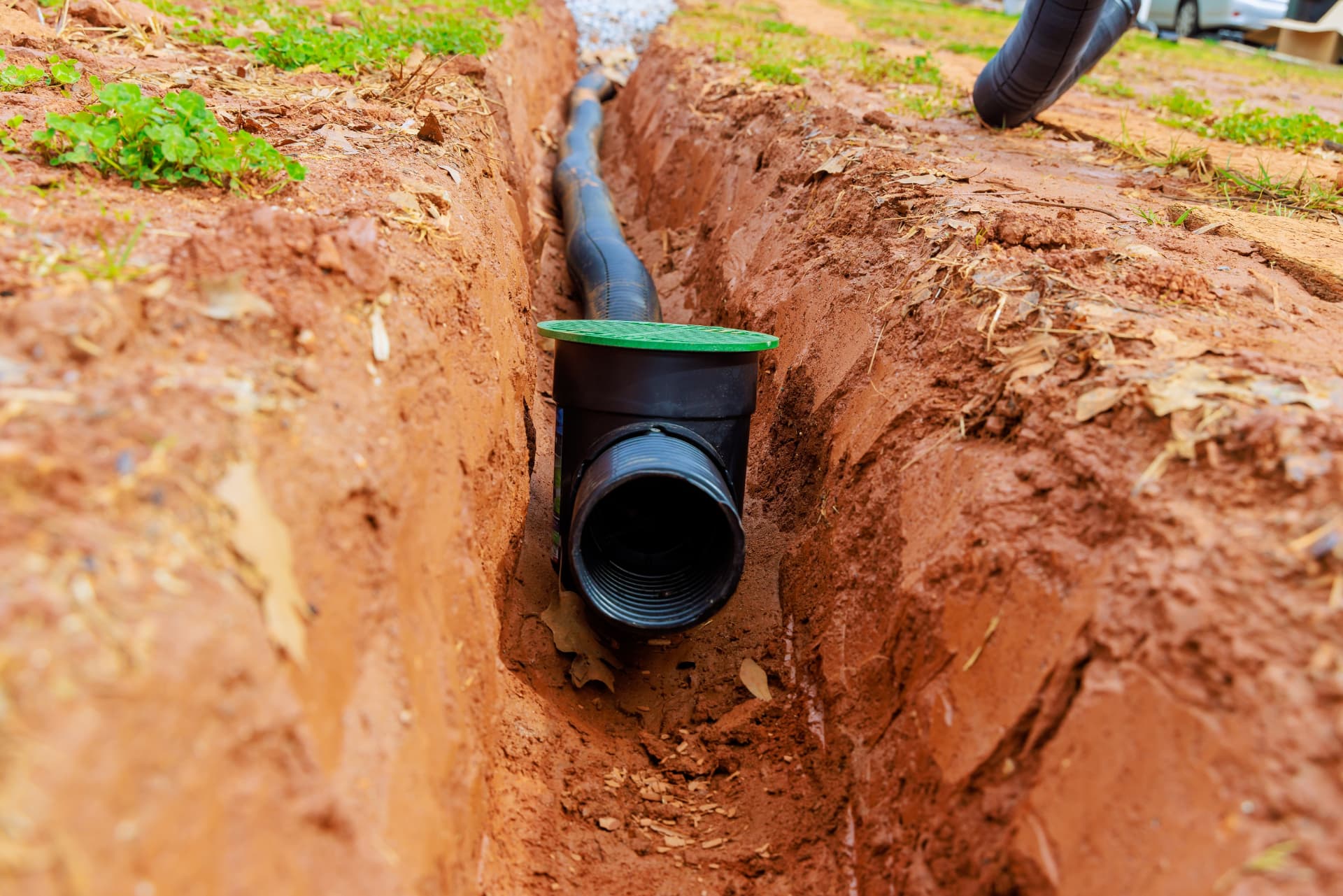
Drainage Installation & Repairin Potters Bar & North London
Standing water on your driveway, lawn or patio doesn't fix itself, it gets worse every winter and starts undermining what's built on top of it. We diagnose the actual cause on site and put in a drainage system sized correctly for your ground, so the water has somewhere proper to go instead of sitting where you don't want it.
Rated 5.0 on Google · family-run in Potters Bar since 2013
Est. 2013
Trading in Potters Bar for over a decade
25+ years
Hands-on groundwork and construction experience
5.0 rating
On our Google Business Profile
Family-run
John and Amy Quinn, not a call centre
Available 24/7
Call any day and speak to the people doing the work
Overview
What drainage work covers
Drainage is the network of pipes, gullies, soakaways and channels that move surface and ground water away from your property before it causes damage. It includes French drains along boundaries, land drains under waterlogged lawns, soakaways for driveways and patios, and channel drains across thresholds and gateways. Most homes in Hertfordshire clay soil need at least one of these at some point.
It's for anyone with a patch of garden that stays soft and boggy long after rain, a driveway that puddles at the low corner, or a patio that sheets water towards the house wall. It's also for anyone extending a hard surface, because building regulations expect new paved areas to manage their own rainwater rather than pushing it onto a neighbour or the public system.
Getting it wrong is expensive twice over: once when the water finds its way into a foundation, cellar or damp course, and again when the surface above has to be dug up to fix the pipework underneath. A groundworker who understands falls, pipe gradients and soil type gets the layout right the first time, because a drain that doesn't fall correctly just becomes an expensive dead pipe full of silt.
Right pipe for the job
Perforated land drain for boggy ground, solid pipe for carrying water away, channel drain for hard surfaces; mixing them up is the most common reason a system fails.
Correct fall and depth
Pipework needs a consistent gradient to a soakaway or outfall. Too flat and it silts up; too steep near the surface and it gets crushed or frost-damaged.
Matched to your soil
Hertfordshire clay drains far slower than sand or gravel, which changes how big a soakaway needs to be and how far it has to sit from the house.
What happens if it waits
What happens when drainage is ignored
Water always finds the lowest point, and if there's no pipe or soakaway to catch it, that lowest point is often a wall, a foundation or a doorway. Left alone, poor drainage doesn't stay a cosmetic issue for long; it moves into the structure of the property and starts costing far more to fix.
Foundation and damp problems
Water sitting against a footing over successive winters softens the ground beneath it and pushes moisture through brickwork, leading to damp patches and, in bad cases, subsidence.
Surface breakup
Block paving, resin and tarmac all fail faster when water sits underneath rather than draining through; freeze-thaw cycles lift and crack surfaces that would otherwise last decades.
Standing water and mud
A lawn or border that can't drain becomes unusable for months of the year, and mud gets tracked indoors every time someone crosses it.
Common mistakes we get called out to fix
- Laying a soakaway too close to the house instead of the recommended distance from any foundation.
- Using solid pipe where a perforated land drain was needed, so water never actually enters the system.
- Ignoring where water already collects and hoping a new patio or driveway will somehow behave differently.
- Connecting surface water into a foul drain, which is against regulations and can cause sewer flooding.
- Skipping a proper gravel surround and geotextile membrane, so the pipe silts up within a couple of seasons.
- Guessing pipe falls instead of setting them out with levels.
Our process
How the job
actually runs
The same sequence on every job, with one point of contact from the first site visit to the final sweep down.
- 01
Site visit and water assessment
We walk the site after checking where water currently collects, look at existing falls, outfalls and soil, and identify the actual source of the problem rather than just the symptom.
- 02
System design
We decide between French drain, land drain, soakaway, channel drain or a combination, sized to the catchment area and the ground's absorption rate.
- 03
Excavation
Trenches or soakaway pits are dug to the correct depth and fall, with spoil managed and existing utilities identified and protected.
- 04
Pipe and soakaway installation
Pipework is bedded on graded gravel, connected with the correct fittings, and set to a continuous fall towards the outfall or soakaway.
- 05
Membrane and backfill
A geotextile membrane wraps gravel-filled trenches and soakaway crates to stop silt ingress, then backfill is compacted in layers.
- 06
Surface reinstatement
Turf, paving, gravel or planting is restored over the completed system so the garden or driveway looks finished, not disturbed.
- 07
Test and handover
We run water through the system to confirm flow and check the surface for any settlement before calling the job done.
Benefits
What you get for
the money you spend
Faster surface water clearance
A correctly sized soakaway or land drain clears standing water within hours of rain instead of days, so the garden or driveway is usable again straight away.
Protects what's built above it
Paving, patios and building foundations last far longer once the water beneath them is actively carried away rather than left to sit and soften the ground.
Avoids repeat digging costs
Getting pipe size, fall and soakaway capacity right the first time means you're not paying to lift a driveway or lawn again in three years to fix a failed system.
Built for Hertfordshire clay
We size soakaways for slow-draining local clay rather than a generic textbook figure, so the system actually copes with real local rainfall.
Reduces damp and subsidence risk
Keeping water away from foundations and damp courses removes one of the biggest long-term risks to a property's structure.
One team, no guesswork handover
The same groundworker who digs the drainage also lays the surface above it, so there's no gap between trades and no argument about who caused a problem.
In detail
Drainage systems in more detail
Not every waterlogged garden or puddling driveway needs the same fix. The right system depends on soil, slope, what's above it and where the water is actually coming from.
French drains vs land drains
A French drain is a gravel-filled trench, often with a perforated pipe at its base, used along boundaries or beside walls to intercept water before it reaches a structure. It works well where water is moving sideways through soil towards a vulnerable point like a foundation or basement wall.
A land drain is a network of perforated pipe laid in a herringbone or grid pattern under a lawn or field, designed to lower the general water table across an area rather than intercept a single flow. It suits gardens that are uniformly waterlogged rather than wet in one obvious spot.
Soakaways
A soakaway is a pit filled with rubble, crates or a proprietary chamber that collects water from downpipes, channel drains or land drains and lets it disperse gradually into surrounding soil. Sizing depends on roof or paved area, rainfall intensity and how quickly the local soil absorbs water.
In heavy Hertfordshire clay, soakaways need to be larger and positioned carefully, since clay absorbs water far more slowly than sand or chalk. Getting this calculation wrong is the most common reason a soakaway overflows in heavy rain rather than storing it.
Channel drains and surface fixes
Channel drains are the metal-grated troughs you see across driveway entrances, garage thresholds and patio edges, catching sheet water before it reaches a door or slopes towards the house. They connect into the same pipe network as land drains and soakaways.
They're also used to correct a driveway that was laid with the wrong fall originally: rather than re-laying an entire surface, a channel drain across the low point can capture water that would otherwise pool or run towards a garage.
New builds, extensions and regulations
Adding a driveway, patio or extension increases the amount of hard surface on a plot, and building control expects that additional rainwater to be managed on-site rather than discharged onto a neighbour's land or overloading the public drainage network.
We design drainage into new paved areas from the start, using permeable surfaces, soakaways or attenuation where needed, so the finished job meets what's expected rather than becoming a problem raised after the fact.
Residential and commercial situations
Most of our drainage work is domestic: gardens, driveways and patios around Potters Bar and the surrounding villages. The principles are the same on commercial or larger sites, just at a bigger scale: car parks, yards and larger roof catchments need drainage calculated for a bigger volume of water.
Whatever the scale, the same rule applies: work out where the water actually comes from and where it needs to go before anything is dug, rather than reacting to a puddle after the fact.
Related services
Groundworks
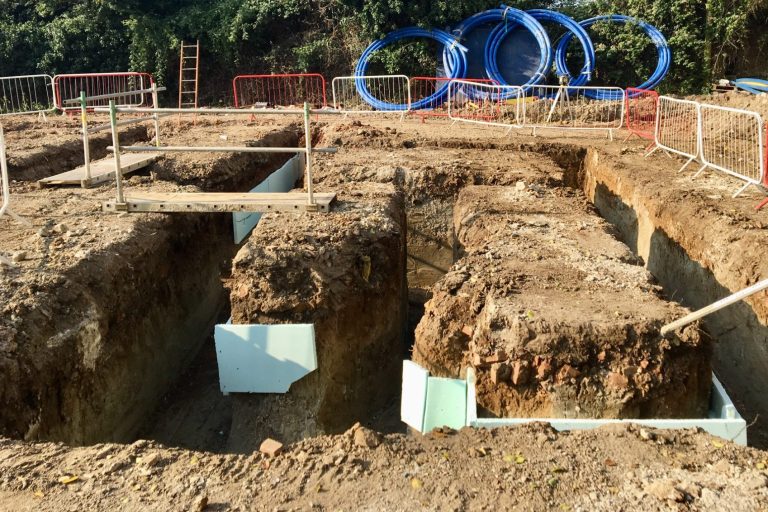
Excavation, muck away, sub-bases and site preparation for homeowners and builders.
Read more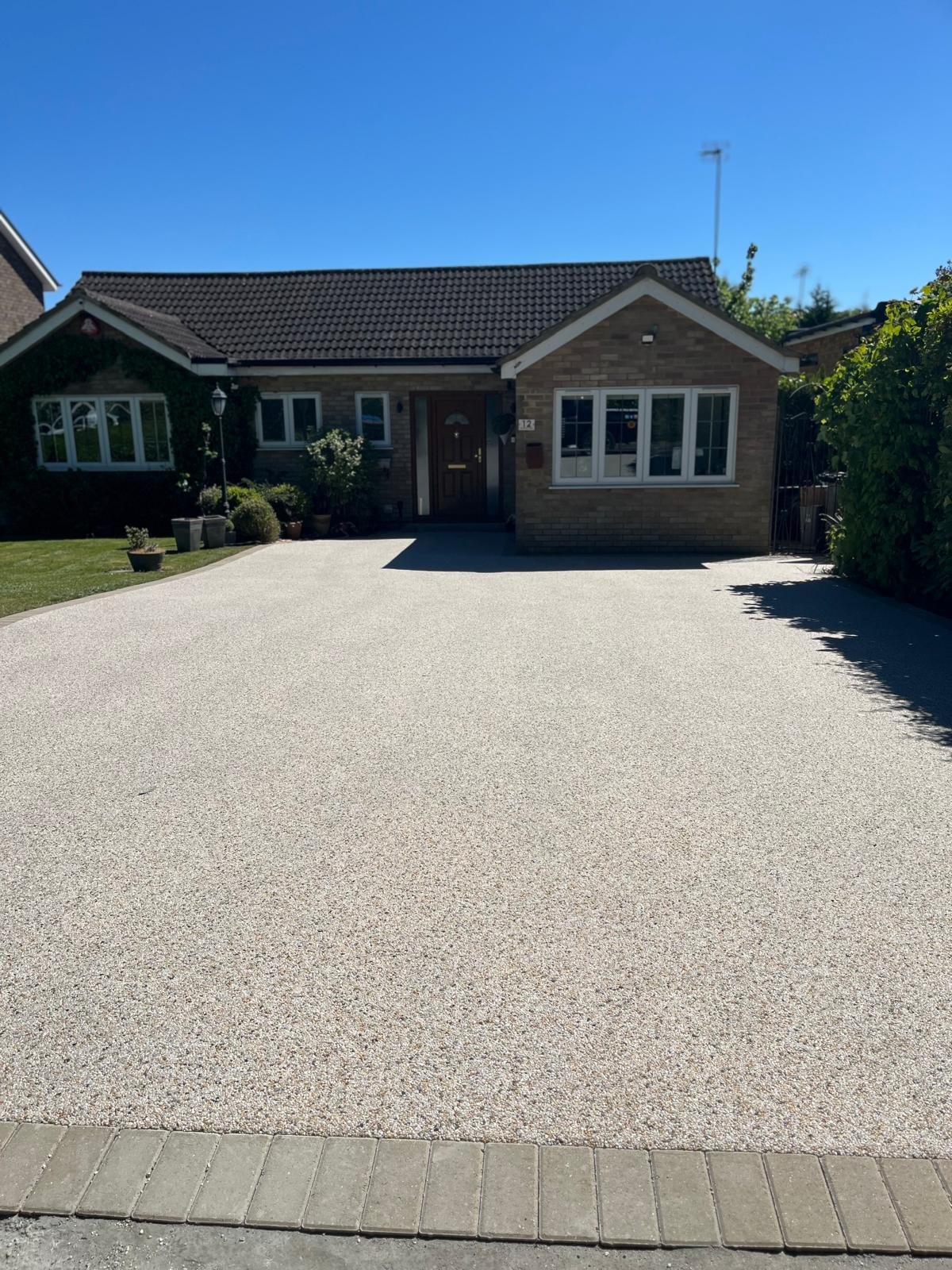
Resin Bound Driveways
Permeable, seamless and built on a properly excavated, drained base, not laid over guesswork.
Read more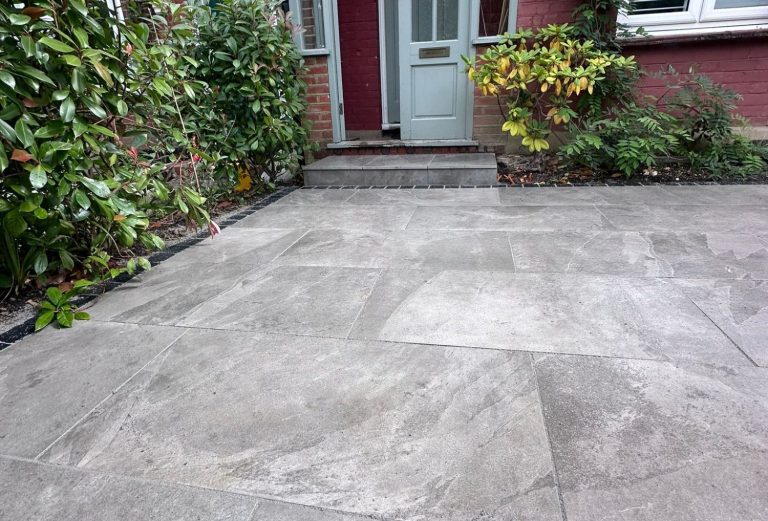
Patios
Porcelain, natural stone and paving laid level, tidy and made to last.
Read more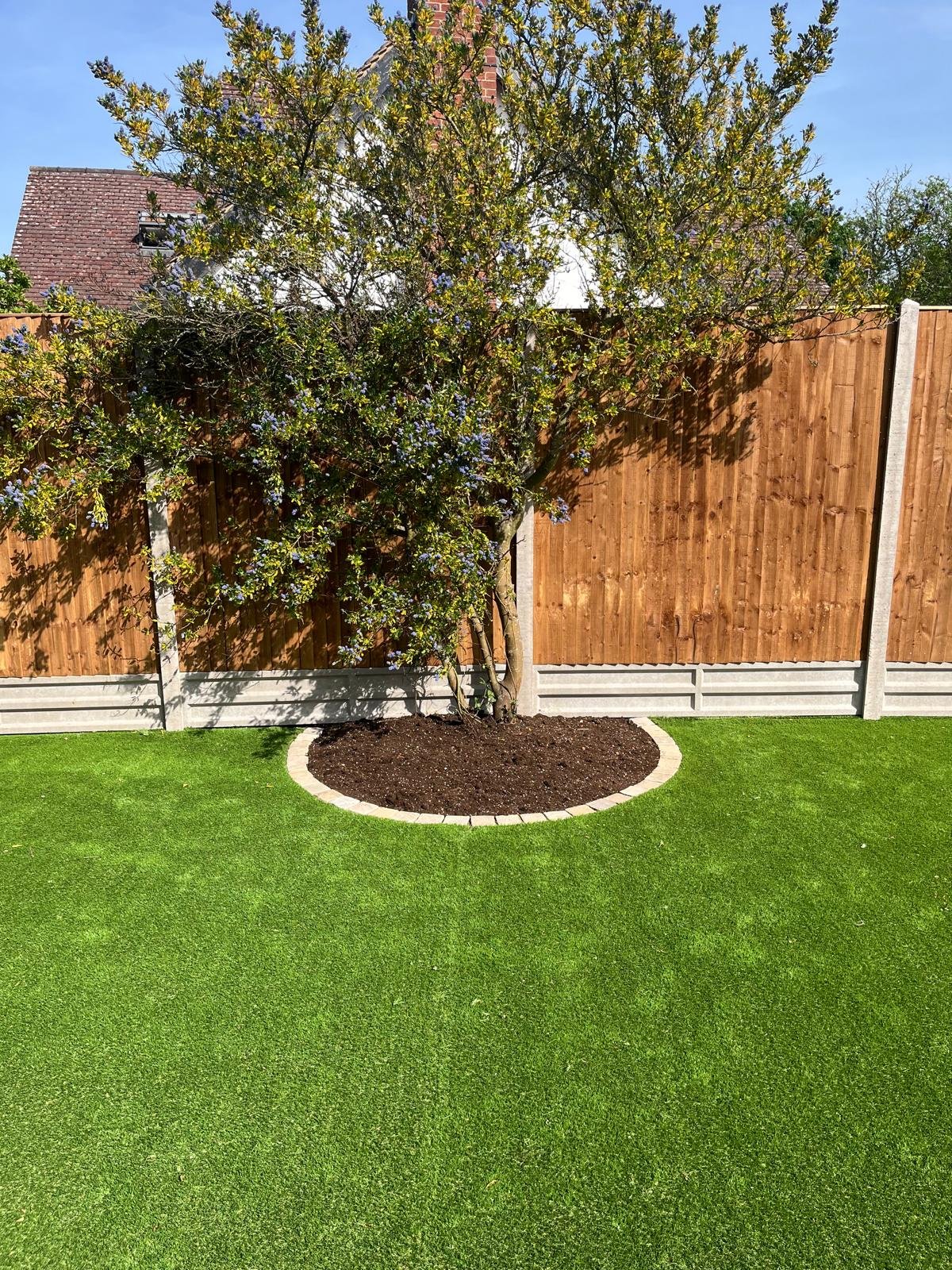
Landscaping
Full garden transformations that finish the job rather than leaving loose ends.
Read moreDrainage across our service areas
- Drainage in Potters Bar
- Drainage in Brookmans Park
- Drainage in Hadley Wood
- Drainage in Cuffley
- Drainage in Cockfosters
- Drainage in Totteridge
- Drainage in Whetstone
- Drainage in Mill Hill
- Drainage in Barnet
Based in Potters Bar, working across south Hertfordshire and north London. See all our services or get in touch.
Common questions
Answers before
you call
- How much does drainage work cost?
- It depends entirely on ground conditions, how much pipework is needed and how far water has to travel to an outfall or soakaway. We assess this properly on a site visit and give you a figure based on what your ground actually needs, not a generic estimate.
- How long does a drainage installation take?
- A single soakaway or short run of French drain can often be completed within a day or two. Larger land drain systems across a whole garden, or drainage tied into a new driveway, typically take three to five days including reinstatement.
- Will you need to dig up my whole garden or driveway?
- Not usually. We trench along the route the pipework needs to follow rather than opening the whole area, and reinstate turf, gravel or paving over the top once the system is tested and backfilled.
- How long does a soakaway last?
- A properly built soakaway with a geotextile membrane and correctly graded gravel or crate system can last well over twenty years. Lifespan drops sharply if it's undersized or the membrane is skipped, since silt clogs the stone over time.
- Do I need to maintain drainage once it's installed?
- Land drains and soakaways need very little upkeep, but gullies and channel drain gratings should be cleared of leaves and debris a few times a year so surface water can actually reach the system.
- Can you fix drainage that's already failing?
- Yes. We regularly dig out and replace soakaways or land drains that were undersized, badly laid or have silted up, and correct falls on existing pipework that was never set out properly.
- Are you available for emergency waterlogging or flooding?
- We're available 24 hours a day, seven days a week, and can attend to assess urgent water problems around the house or garden, though permanent drainage solutions are scheduled once the ground and cause are properly understood.
- Do you cover areas near Potters Bar?
- Yes, we carry out drainage work across Potters Bar, Brookmans Park, Hadley Wood, Cuffley, Cockfosters, Totteridge, Whetstone, Mill Hill and Barnet, all areas we know well for their clay ground conditions.
- Can drainage work be combined with a new driveway or patio?
- Yes, and it should be. We install drainage as part of the groundwork before any new surface goes down, which is far more effective and less disruptive than adding it retrospectively after paving is complete.
- What's the difference between surface water and foul drainage?
- Surface water is rain runoff from roofs, driveways and gardens; foul drainage carries wastewater from the house. The two must stay separate; connecting surface water into a foul system is against regulations and can cause it to back up.
Get your drainagesorted properly
Tell us where the water's collecting and we'll come out, work out what's actually causing it, and put in a system built for your ground. Call any time, day or night.
Established 2013 · 25+ years’ experience · 5.0 rated on Google · family-run · available 24 hours, 7 days