
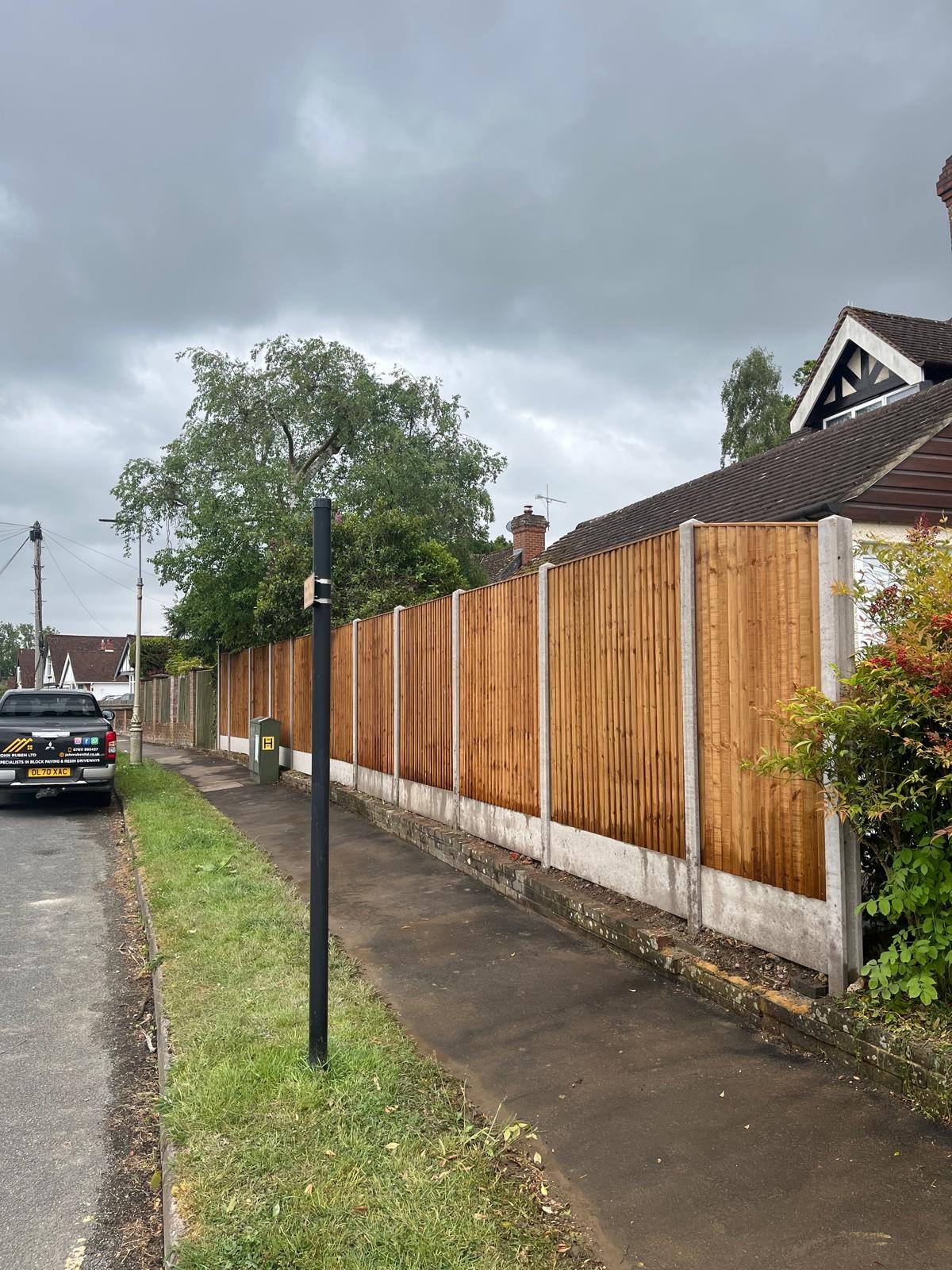
Fencing Installationin Potters Bar &North London
A fence that stays upright through winter gales and doesn't need touching for years starts with the right posts, the right depth, and the right ground read. We set concrete posts to proper depth and level every run so you get a boundary that holds, not one you're propping up by spring.
Rated 5.0 on Google · family-run in Potters Bar since 2013
Est. 2013
Trading in Potters Bar for over a decade
25+ years
Hands-on groundwork and construction experience
5.0 rating
On our Google Business Profile
Family-run
John and Amy Quinn, not a call centre
Available 24/7
Call any day and speak to the people doing the work
Overview
What we install
Fencing covers timber close board panels, feather edge boards, concrete gravel boards, post and rail, and trellis toppers, built to mark a boundary, keep pets and children in, and give a garden privacy from neighbouring plots. It suits front gardens needing a low screen as much as rear gardens wanting full enclosure.
It's needed when an old fence has rotted at the base, leant over after storms, or a new build has no boundary treatment at all. Extensions, new driveways, and landscaping projects often trigger a fence replacement because ground levels change or old posts get disturbed during groundwork.
Getting the groundwork right matters more than the timber. Posts set too shallow, or set in soil instead of concrete, work loose within a couple of seasons. A contractor who understands drainage, ground conditions, and post spacing gets a fence that stays straight long after a quick DIY job has started leaning.
Concrete-set posts
Posts set to correct depth in concrete, not just rammed into soil, so they resist wind loading and frost heave over time.
Level, straight runs
String lines and levels used on every run so panels sit square and gates hang correctly, not just eyeballed on the day.
Ground-matched design
Gravel boards and post spacing adjusted to slopes, tree roots, and existing boundaries rather than a one-size layout.
What happens if it waits
Why fences fail early
Most fence failures we get called to replace share the same causes: posts set too shallow, timber sitting directly on wet soil, or panels fixed to posts that were never properly plumbed. None of it shows immediately; it shows up after the first proper storm or two winters of wet ground.
Post rot at the base
Timber posts set without concrete, or with gravel boards missing, sit in wet soil and rot through within a few years, taking the whole panel with them.
Leaning after storms
Posts set too shallow or in poorly compacted soil move under wind load, and once a post leans the whole run of panels racks and gaps open up.
Boundary disputes
Fences installed without checking boundary lines or party wall position can end up on the wrong side of a marker, causing arguments with neighbours later.
Common mistakes we get called out to fix
- Setting posts in soil or hardcore instead of concrete
- Skipping gravel boards so timber sits on wet ground
- Ignoring existing boundary markers or fence positions
- Spacing posts too far apart for the panel weight
- Fitting panels before posts have cured properly
- Not accounting for slope, leaving gaps under panels
Our process
How the job
actually runs
The same sequence on every job, with one point of contact from the first site visit to the final sweep down.
- 01
Site visit and measure
We walk the boundary, check ground conditions, existing posts, slopes, and access, and confirm what you want to achieve with the fence.
- 02
Boundary check
We confirm the boundary line and any shared responsibility with neighbours before marking out post positions, avoiding later disputes.
- 03
Old fence removal
Existing panels, posts, and concrete footings are removed and cleared, with old post holes dug out ready for new concrete.
- 04
Post setting
New posts are set plumb and level in concrete at correct depth, spaced to suit panel width and ground conditions.
- 05
Panel and gravel board fitting
Once posts have cured, gravel boards, panels or feather edge boards are fixed square, following ground slope where needed.
- 06
Gates and trims
Gates are hung and adjusted to swing and latch cleanly, and any capping or trellis toppers fitted to finish the run.
- 07
Clean-up and check
Site cleared of offcuts and old timber, every panel and post checked for level and security before we finish.
Benefits
What you get for
the money you spend
Faster than DIY
A full boundary run is set and panelled in a fraction of the time a weekend DIY job takes, with posts curing properly before load is applied.
Years, not seasons
Concrete-set posts at correct depth resist wind and ground movement far longer than posts rammed into soil or hardcore.
No early replacement cost
Getting gravel boards and post depth right the first time avoids paying twice for a fence that rotted or leant within a couple of years.
Consistent, level runs
Levels and string lines on every post mean straight fence lines and gates that hang and latch properly, not a wavy boundary.
Drainage-aware setting
Post holes and gravel boards are set to shed water away from timber, reducing base rot on heavier clay or waterlogged plots.
One less thing to manage
Boundary checked, old fence cleared, new one built and site tidied in one visit sequence, without you sourcing timber or tools yourself.
In detail
Fencing in more detail
Fencing choice depends on privacy needs, budget, wind exposure, and how the boundary is used day to day, from a low front garden rail to a full rear garden enclosure.
Timber types and finishes
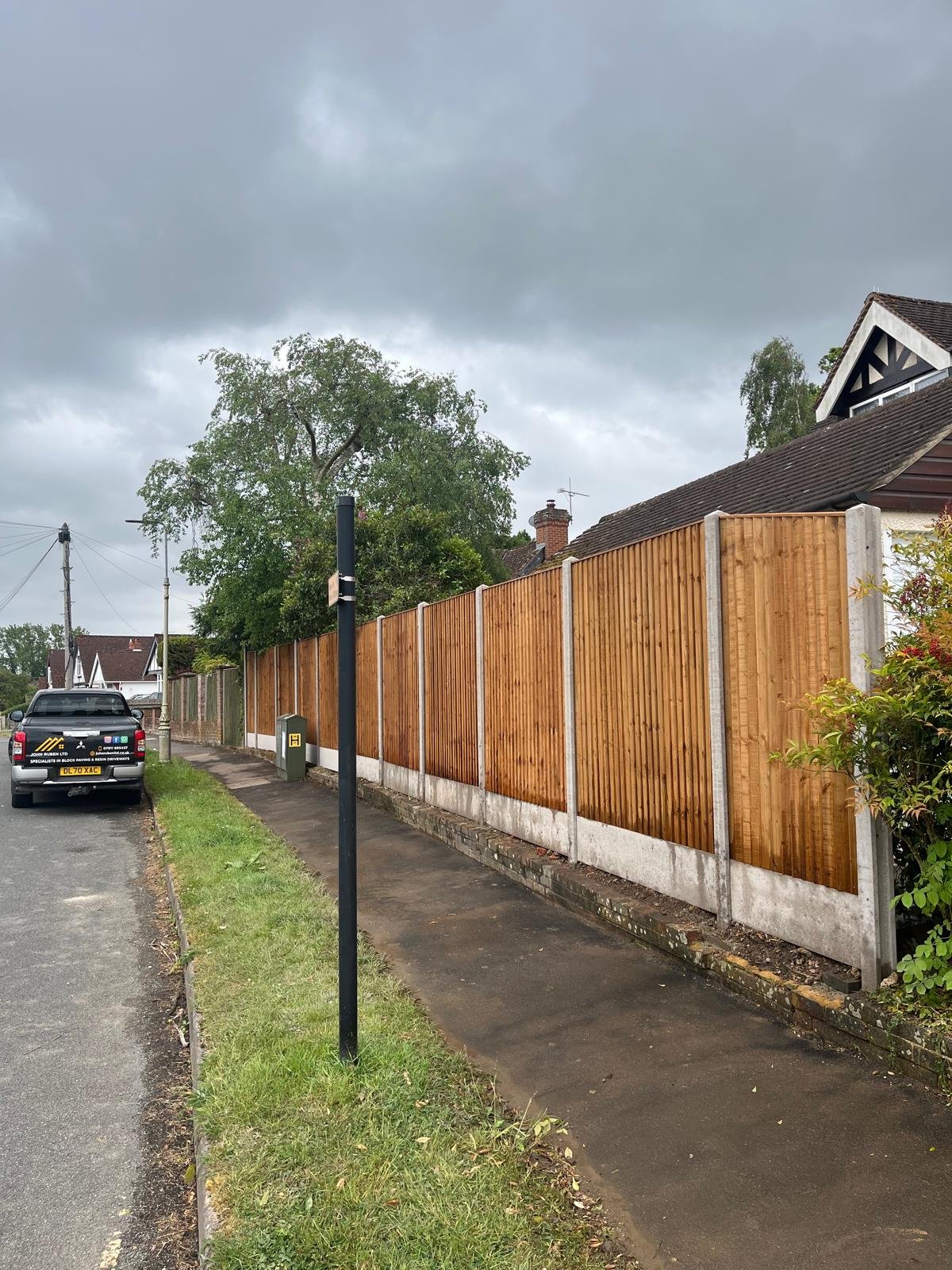
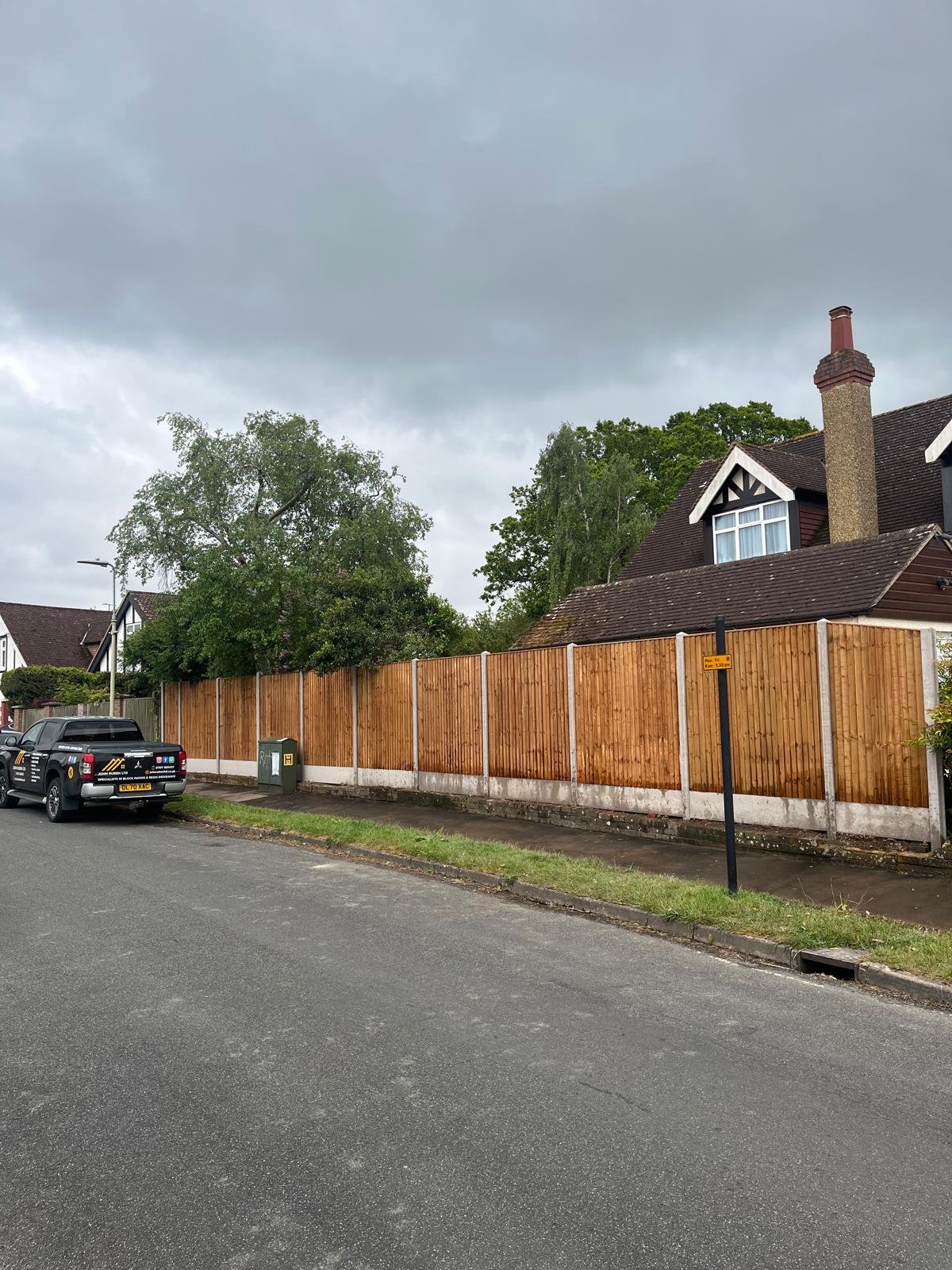
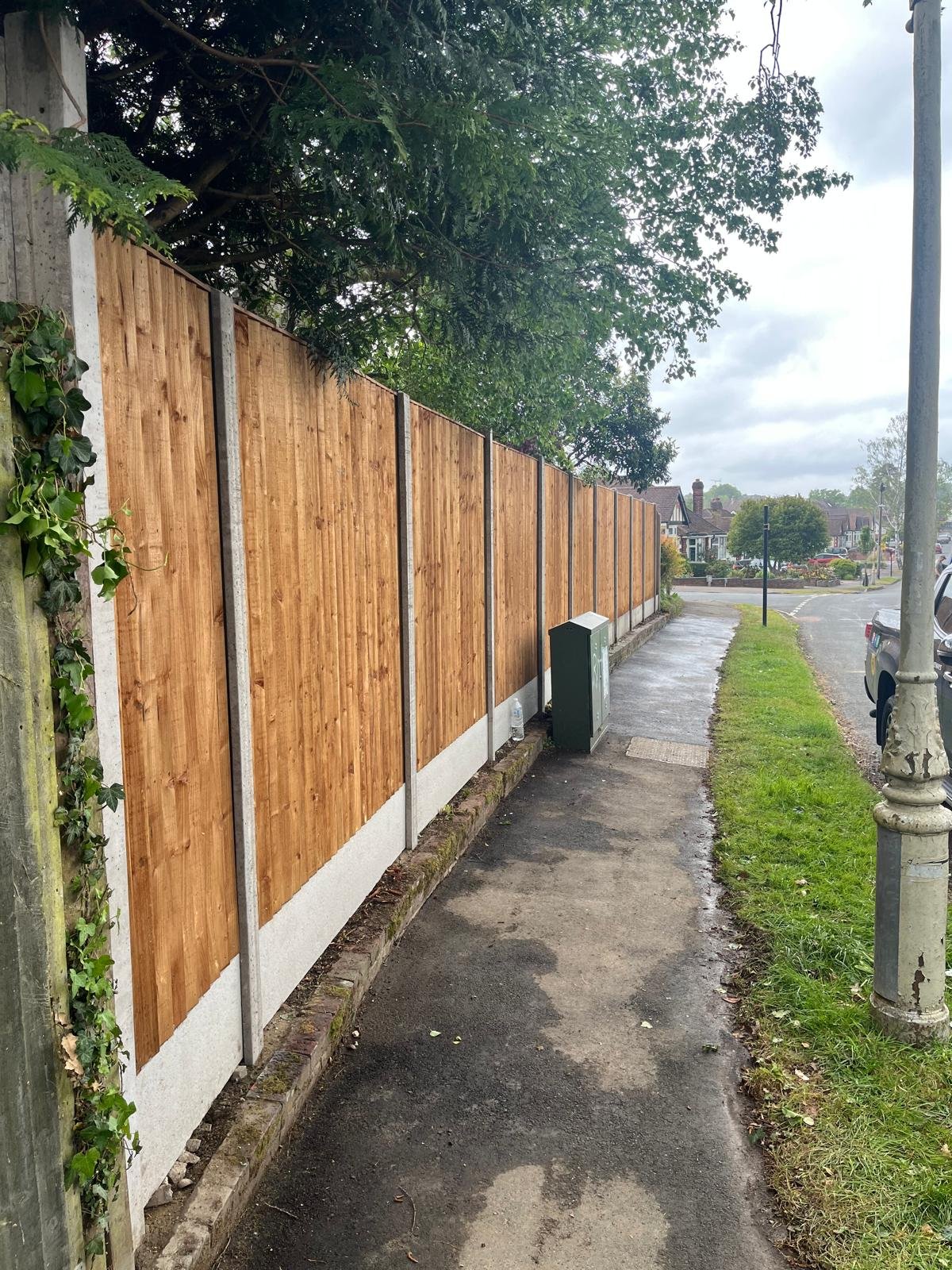
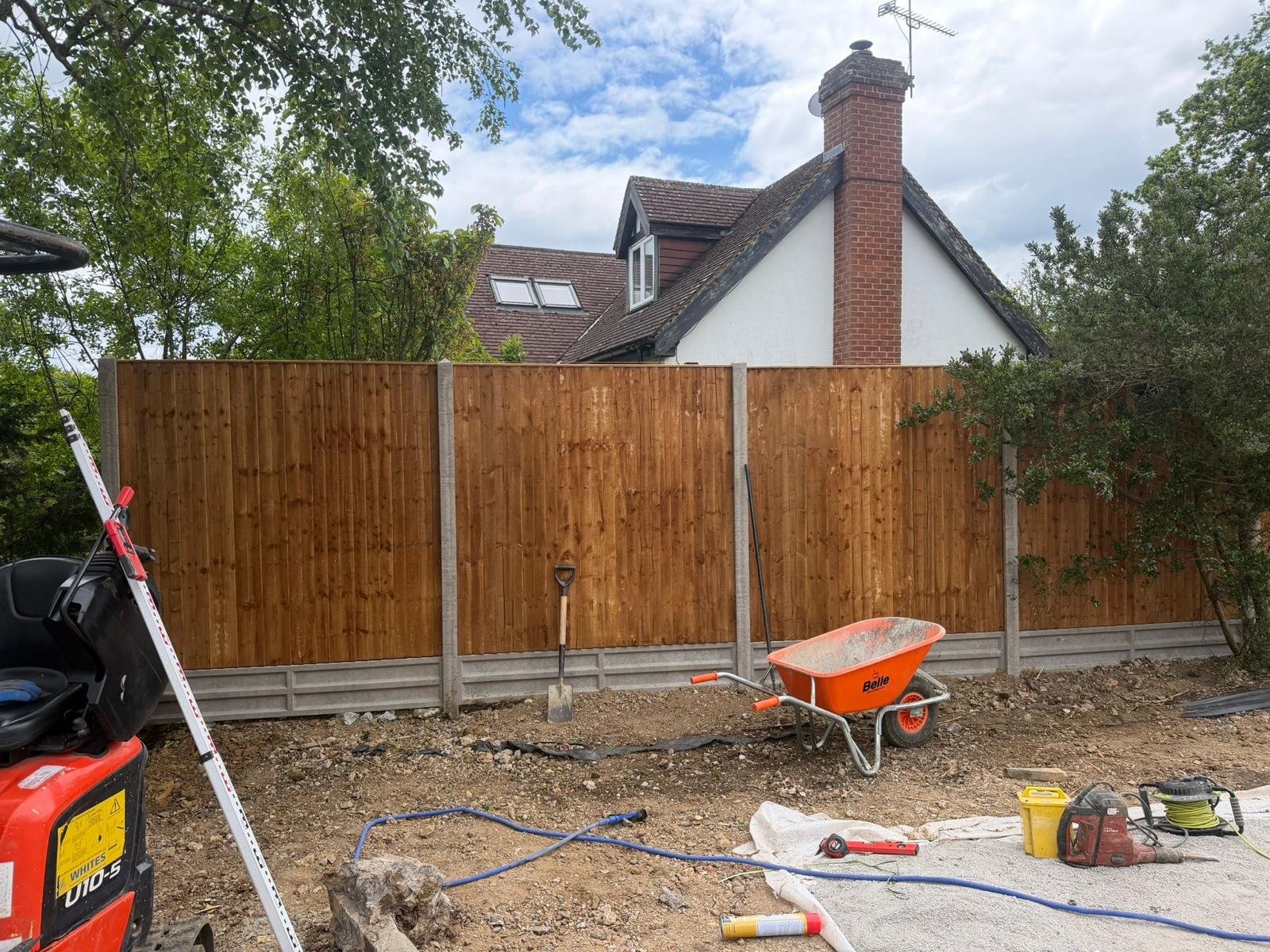
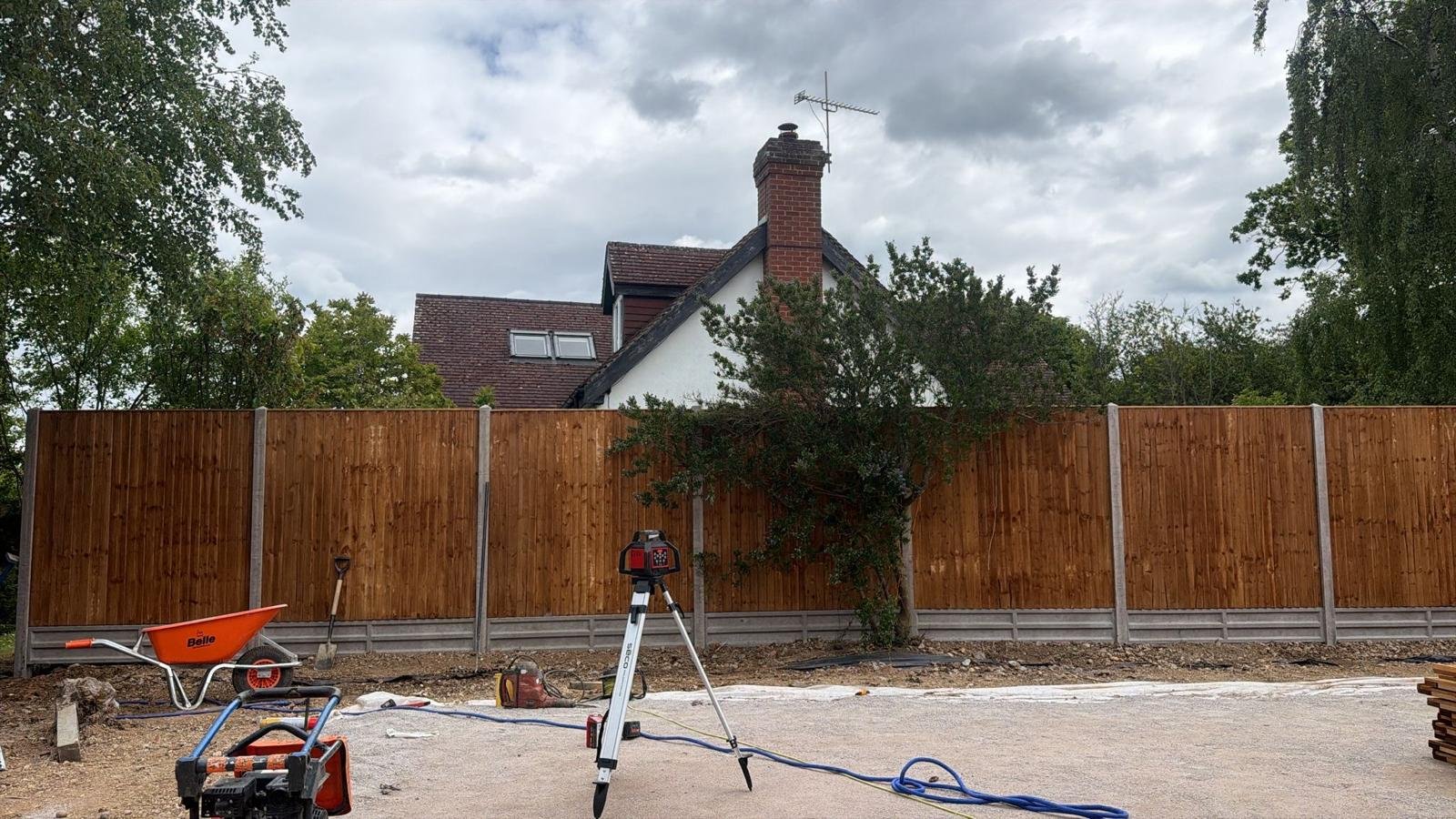
Close board fencing uses overlapping feather edge boards nailed to horizontal arris rails, giving a solid, gap-free screen that's the standard choice for rear garden privacy. Panel fencing, either lap or featherboard panels, is quicker to install and more budget-friendly, though generally less robust in exposed, windy positions than close board.
Post and rail with wire or trellis suits front boundaries or paddock-style plots where full privacy isn't the goal. Pressure-treated softwood is the common material; it's treated to resist rot but still benefits from gravel boards keeping the lowest timber off wet soil, extending its working life considerably.
Post setting methods
Concrete-set timber or concrete posts remain the most reliable method for garden fencing, giving a rigid base that resists both wind loading and ground movement. Post depth is generally around a third of the total post height below ground, adjusted for soil type: looser or sandy ground needs extra depth or a wider concrete base.
Metal post spikes driven into ground suit lighter fencing on already-firm soil, but they're less reliable on clay or disturbed ground where they can work loose. For anything more than a low decorative rail, concrete footings give a boundary that stays straight through multiple winters without revisiting.
Slopes and uneven ground
Sloped gardens need either stepped panels, where each bay steps down following the ground, or raked panels custom-cut to follow the slope continuously. Stepped fencing is quicker and cheaper; raked fencing gives a cleaner line but costs more in cut timber and fitting time.
Gravel boards are particularly important on slopes, closing off the gap under panels where ground drops away, keeping animals in and preventing timber from sitting directly on wet or uneven soil at the low end of a run.
Gates and access points
Garden gates need posts set slightly heavier than standard fence posts, since a swinging gate puts repeated lateral load on its hinge post. We size posts and concrete footings to the gate weight, not just match them to the rest of the run, so gates don't sag or drop over time.
Latch and hinge position is set to the ground level at the gate, adjusted where paths or patios sit either side, so the gate clears the ground through all seasons without dragging when timber swells in wet weather.
Residential and trade work
Most of our fencing work is residential: replacing rotted rear garden boundaries, adding privacy screens after a new build, or securing plots for young children and pets. Each job is measured and quoted at the property, since ground conditions and boundary length vary block to block.
We also fit fencing alongside groundwork and landscaping projects, where new driveways, patios or extensions change ground levels and disturb existing boundaries. Handling fencing as part of the same visit avoids gaps between trades and keeps ground levels consistent across the whole plot.
Related services
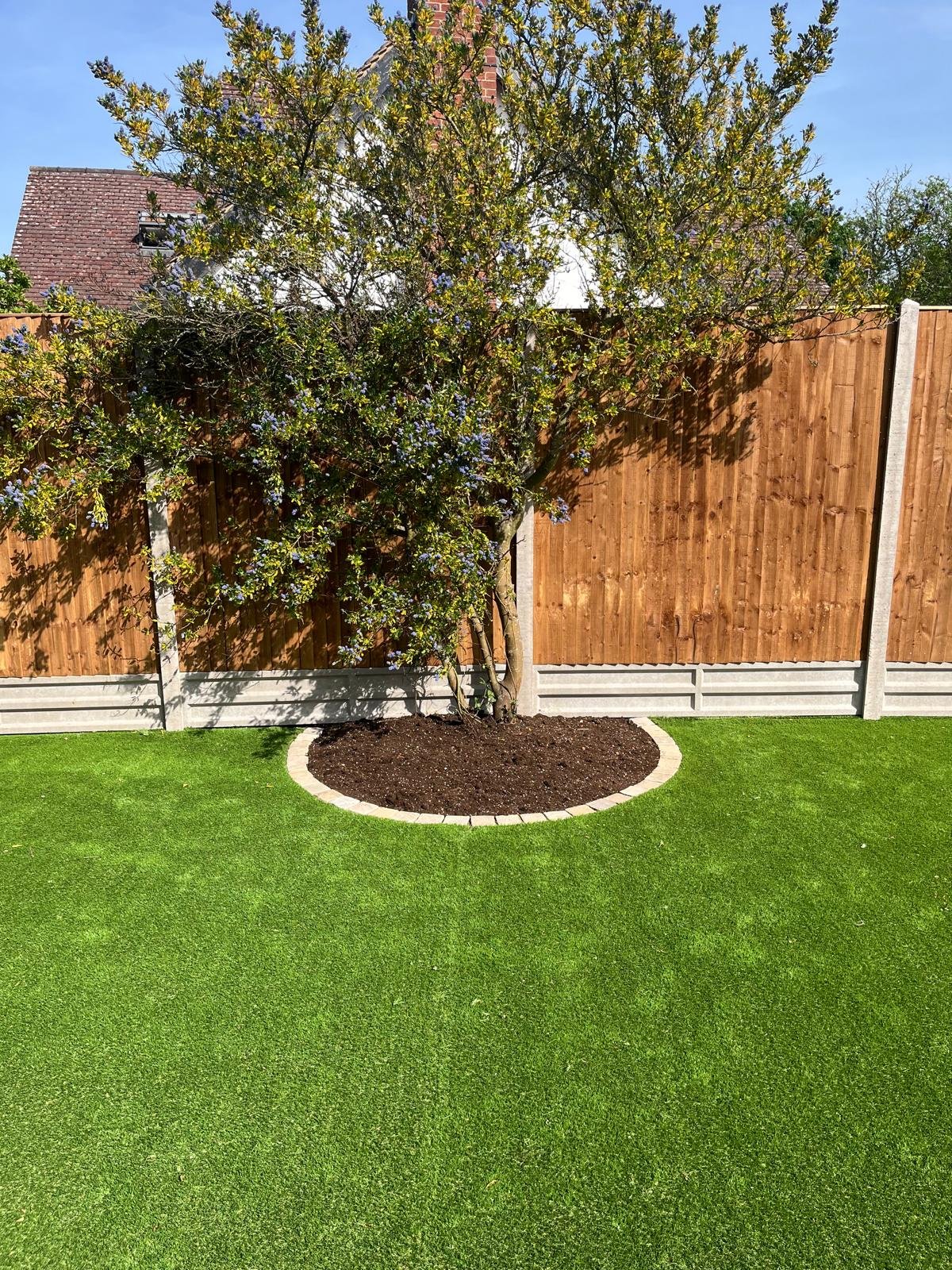
Landscaping
Full garden transformations that finish the job rather than leaving loose ends.
Read more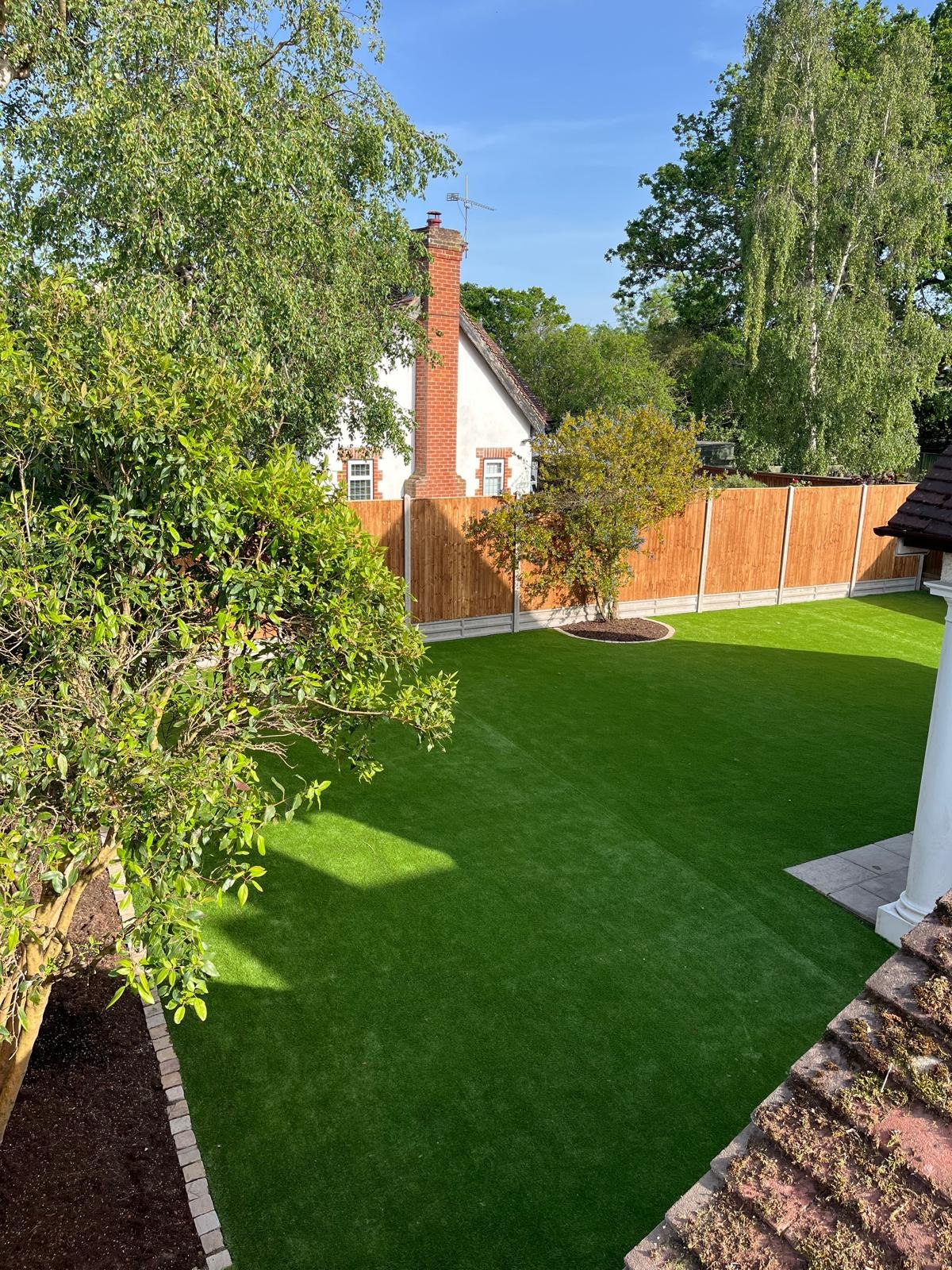
Artificial Grass
Laid on a prepared, free-draining base so it stays flat and dry underfoot.
Read more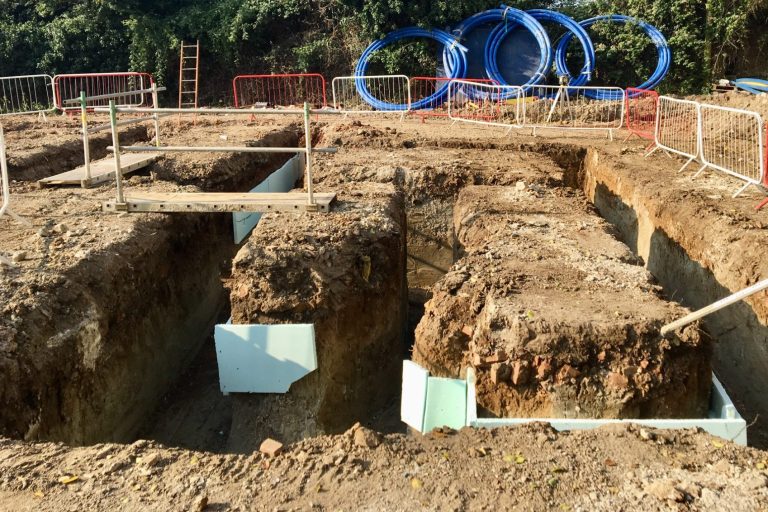
Groundworks
Excavation, muck away, sub-bases and site preparation for homeowners and builders.
Read more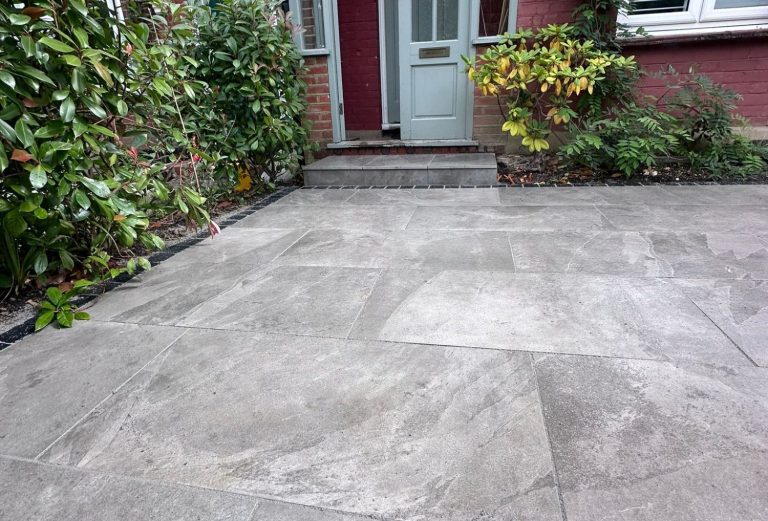
Patios
Porcelain, natural stone and paving laid level, tidy and made to last.
Read moreFencing across our service areas
- Fencing in Potters Bar
- Fencing in Brookmans Park
- Fencing in Hadley Wood
- Fencing in Cuffley
- Fencing in Cockfosters
- Fencing in Totteridge
- Fencing in Whetstone
- Fencing in Mill Hill
- Fencing in Barnet
Based in Potters Bar, working across south Hertfordshire and north London. See all our services or get in touch.
Common questions
Answers before
you call
- How much does new fencing cost?
- Cost depends on fence length, timber type, post setting method, and ground conditions such as slopes or old fence removal. We assess this at a site visit and give you a clear figure before any work starts, no fixed online pricing.
- How long does a fencing job take?
- A typical rear garden run is completed within a day or two once posts are set and cured, though longer boundaries or gate installations can take longer. We confirm timescale after seeing ground conditions and access on site.
- Do you remove the old fence?
- Yes, old panels, posts, and concrete footings are dug out and cleared as part of the job, with the site left tidy. This is factored into the visit and quote, so there's nothing left for you to dispose of.
- How long does a new fence last?
- A well-set close board fence with concrete posts and gravel boards typically lasts well over a decade with basic upkeep, depending on exposure and ground conditions. Coastal or very exposed sites see more wear on timber than sheltered gardens.
- Does fencing need maintenance?
- Pressure-treated timber benefits from a re-stain or treatment every few years to slow weathering, and it's worth checking gravel boards and post bases annually for early rot signs. Concrete posts and rails need very little attention.
- Can you match an existing fence?
- In most cases yes, we can match panel style, height and post type to an existing run so a repair or extension blends in rather than looking patched. We check this during the site visit.
- Do I need to agree boundary work with my neighbour?
- It's good practice to confirm boundary position and shared responsibility with neighbours before work starts, even where it's not a legal requirement. We flag any boundary ambiguity we spot during the site visit.
- Can you work on sloped or uneven gardens?
- Yes, we regularly fit stepped or raked panel fencing to follow sloping ground, and we adjust post depth and gravel boards to suit uneven or soft ground as needed.
- Are you available for urgent fence repairs?
- We take calls 24 hours, seven days a week, including for storm-damaged or collapsed fencing that needs urgent attention. Call any time to talk through what's needed.
- Do you cover areas near Potters Bar?
- Yes, alongside Potters Bar we regularly fit fencing in Brookmans Park, Cuffley, Hadley Wood, Cockfosters, Totteridge, Whetstone, Mill Hill and Barnet.
Recent work
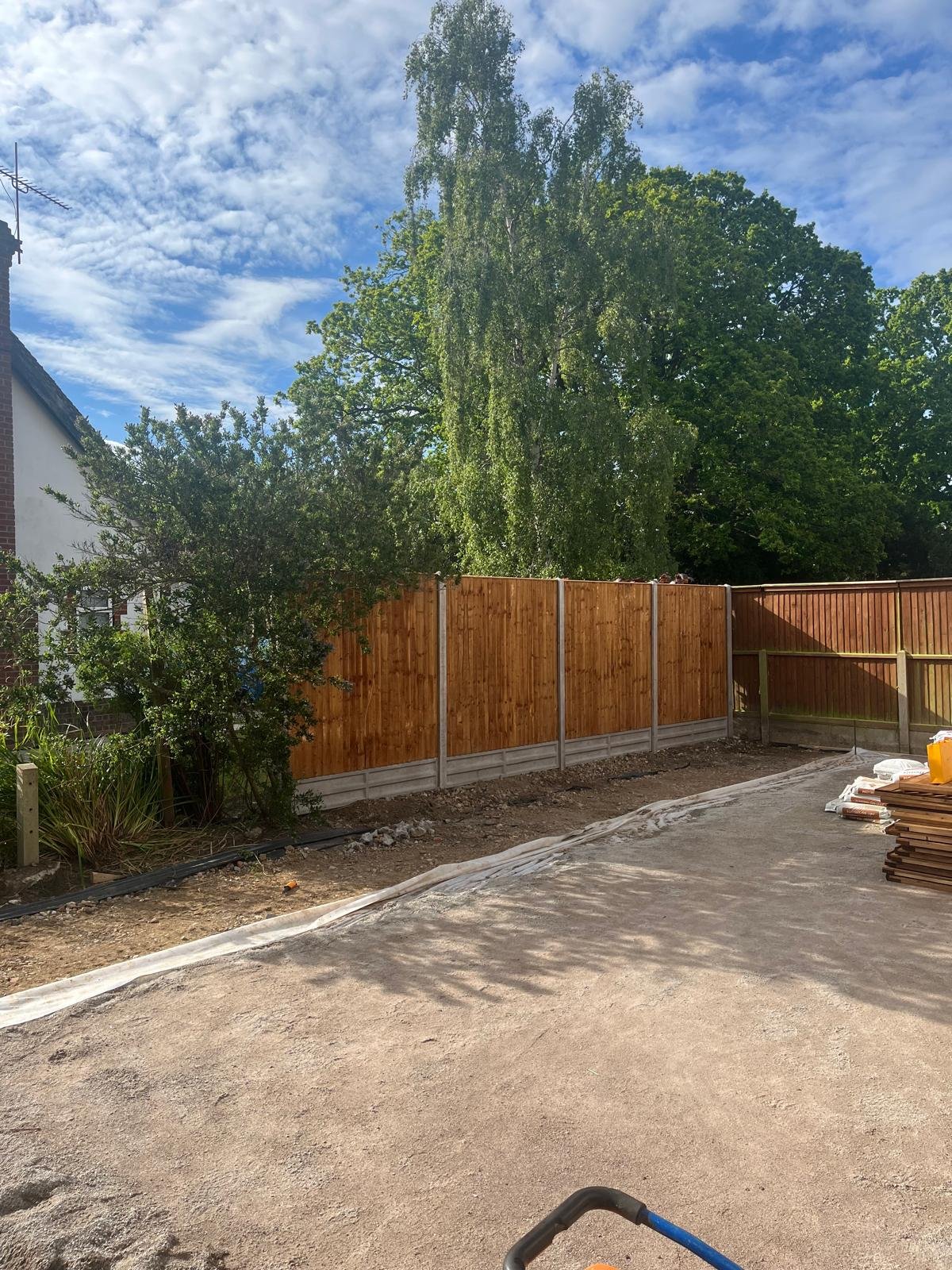
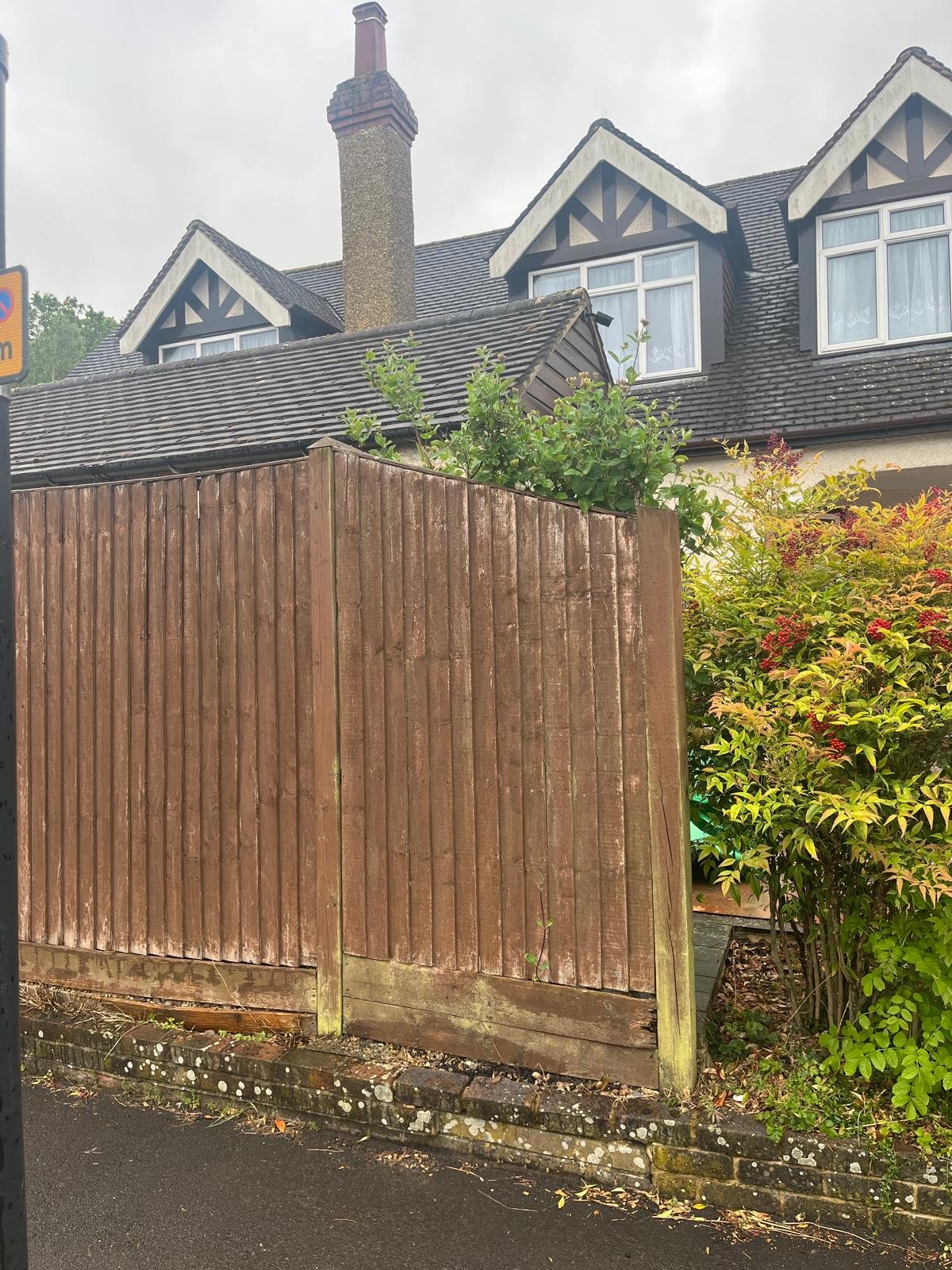
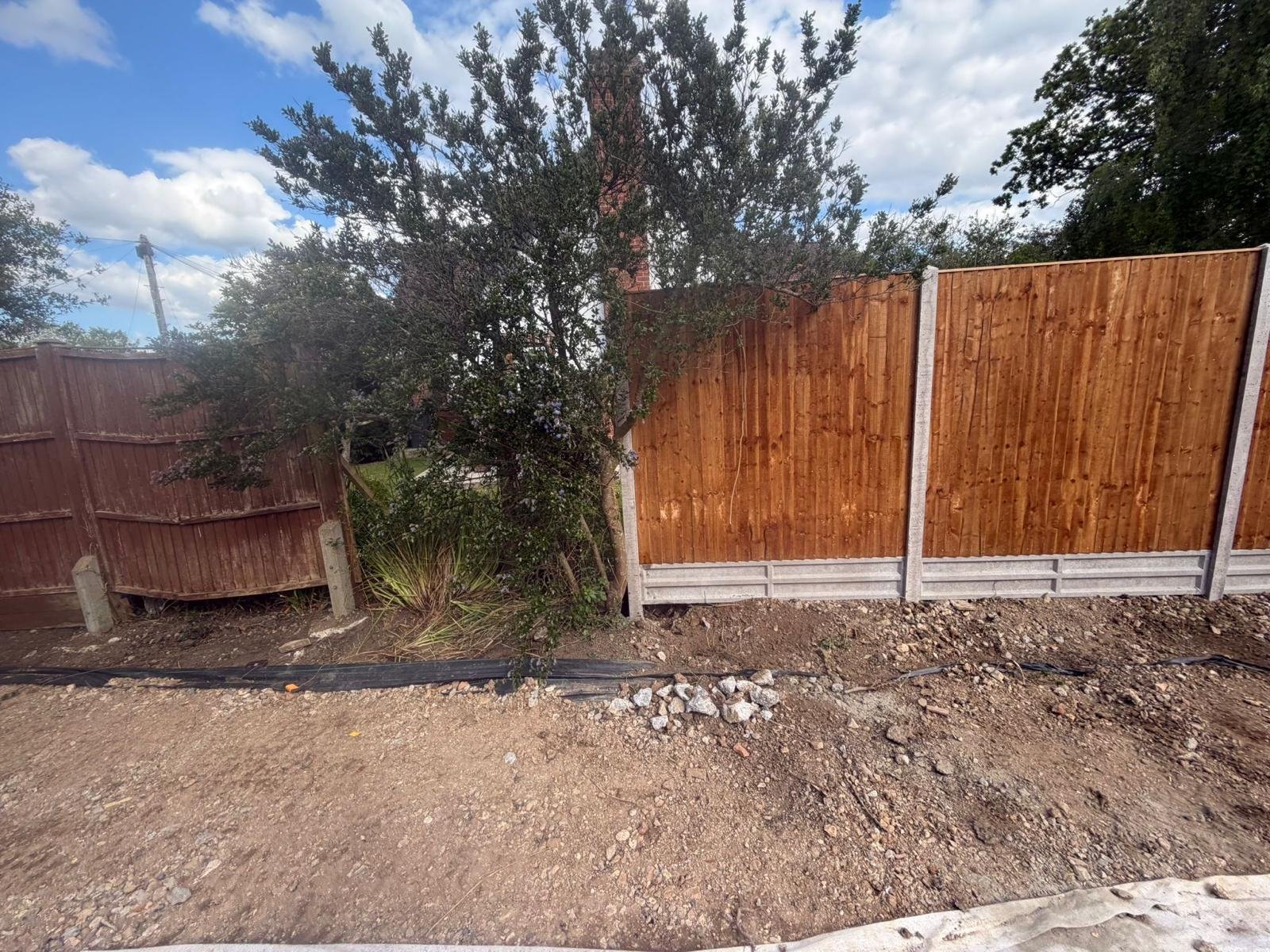
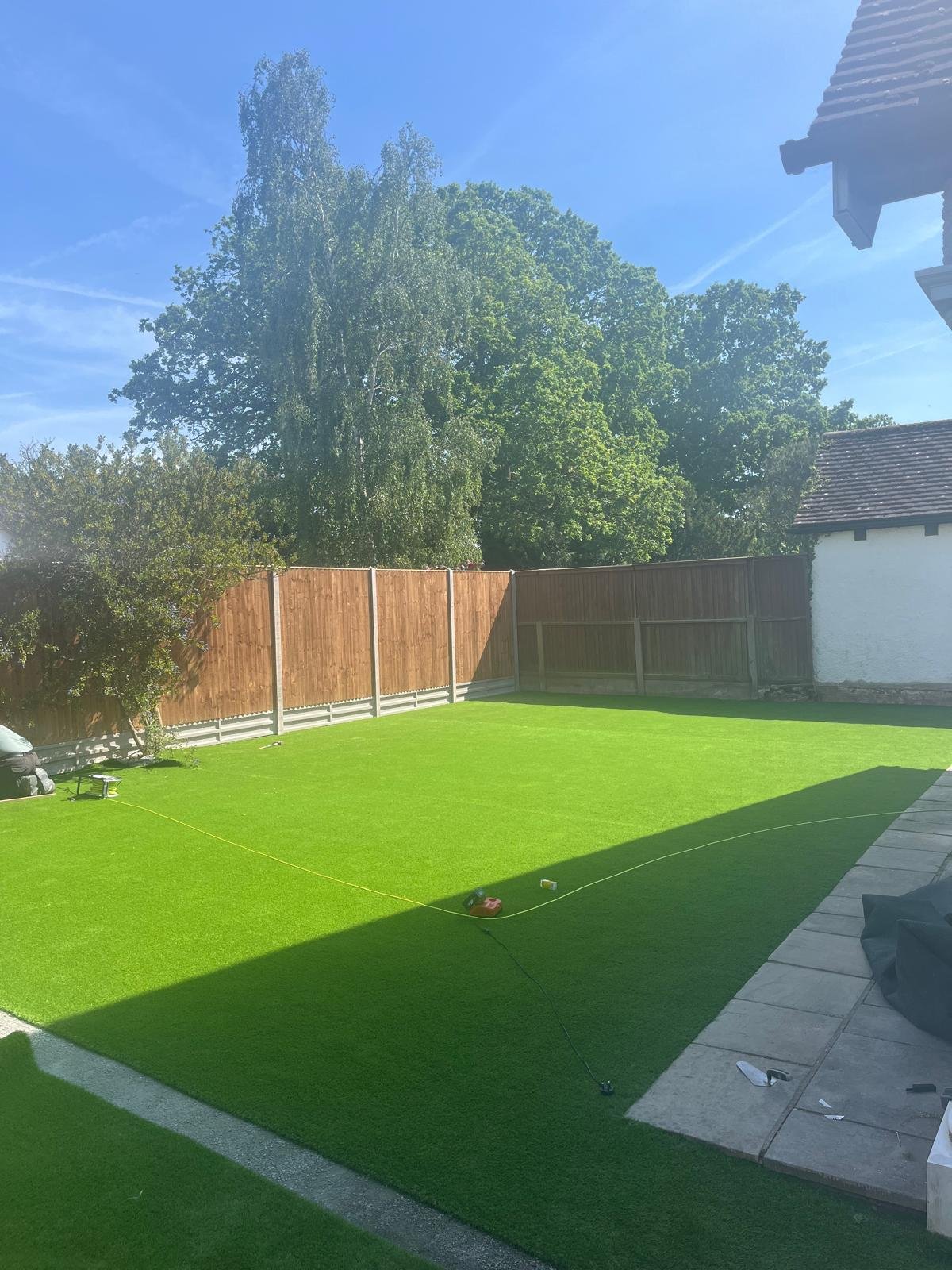
Ready for a fencethat stays straight?
Call us for a site visit anywhere in Potters Bar or north London. We'll check the ground, confirm boundaries, and give you a clear plan before anything is dug.
Established 2013 · 25+ years’ experience · 5.0 rated on Google · family-run · available 24 hours, 7 days