
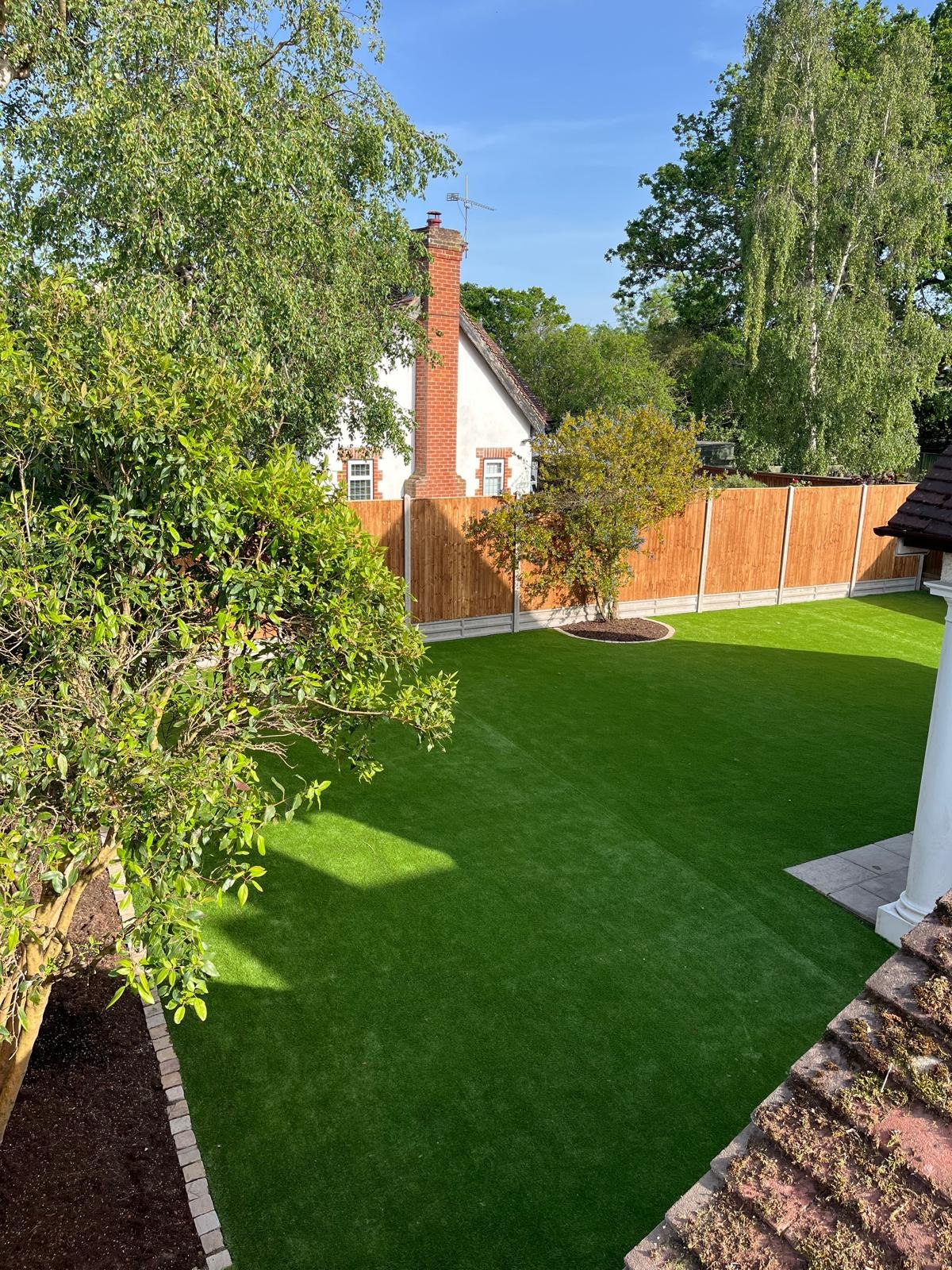
Artificial GrassInstallation in Potters Bar &North London
A lawn that stays flat, drains properly, and doesn't need mowing again comes down to what's underneath it, not just the turf on top. We build a compacted, permeable sub-base under every install so the grass sits flush, sheds water, and doesn't ripple or sink within a season.
Rated 5.0 on Google · family-run in Potters Bar since 2013
Est. 2013
Trading in Potters Bar for over a decade
25+ years
Hands-on groundwork and construction experience
5.0 rating
On our Google Business Profile
Family-run
John and Amy Quinn, not a call centre
Available 24/7
Call any day and speak to the people doing the work
Overview
What we install
Artificial grass installation replaces a real lawn, or bare and patchy ground, with a synthetic turf surface built on a compacted sub-base for drainage and stability. It suits front and rear gardens, play areas, and low-maintenance borders where a real lawn struggles with shade, heavy use, or waterlogging.
It's typically needed when a lawn has become patchy or muddy from dogs and children, when a garden gets too little sun for grass to establish, or when a homeowner simply wants to stop mowing and feeding a lawn every week through spring and summer. Older, worn lawns with poor drainage are common candidates too.
The turf itself is only part of the job. Sub-base preparation, meaning excavation, edging, compaction and a permeable base layer, is what determines whether the finished lawn stays flat and drains, or ends up pooling water and rippling within a year. Getting that groundwork right is the difference between a lawn that lasts and one that needs relaying.
Compacted sub-base
Ground excavated and built up with a compacted, permeable base so water drains through rather than sitting on the surface.
Secure, neat edging
Edges pinned and finished against patios, borders and fencing so the turf doesn't lift, curl or show gaps over time.
Realistic, durable turf
Pile heights and densities chosen to suit how the area is used, from light foot traffic to heavy family and pet use.
What happens if it waits
Why artificial grass installs go wrong
Most problem installs we're asked to fix come from skipped sub-base work: turf laid straight onto existing soil or a thin layer of sand without proper excavation or compaction. It looks fine on day one and starts rippling, sinking, or pooling water within a season.
Pooling and poor drainage
Turf laid without a permeable, compacted base traps water underneath, leading to smells, moss, and a spongy or waterlogged feel underfoot.
Rippling and sinking
Insufficient sub-base compaction lets the ground settle unevenly beneath the turf, causing visible ripples and low spots within months.
Lifting edges and weed growth
Poorly secured edges let turf lift away from borders and patios, and gaps let weeds and grass push through from underneath.
Common mistakes we get called out to fix
- Laying turf directly onto existing lawn or soil
- Skipping the compacted sub-base layer entirely
- Using non-permeable base materials that trap water
- Failing to pin or secure edges properly
- Ignoring existing drainage falls in the garden
- Using cheap, low-density turf on high-traffic areas
Our process
How the job
actually runs
The same sequence on every job, with one point of contact from the first site visit to the final sweep down.
- 01
Site visit and assessment
We check ground condition, existing drainage, access, and how the area will be used to plan sub-base depth and turf choice.
- 02
Excavation
Existing lawn, turf and topsoil removed to the correct depth, clearing the area ready for a proper sub-base build-up.
- 03
Edging and containment
Timber or rigid edging installed around the perimeter to retain the sub-base and give the turf a clean, secure boundary.
- 04
Sub-base installation
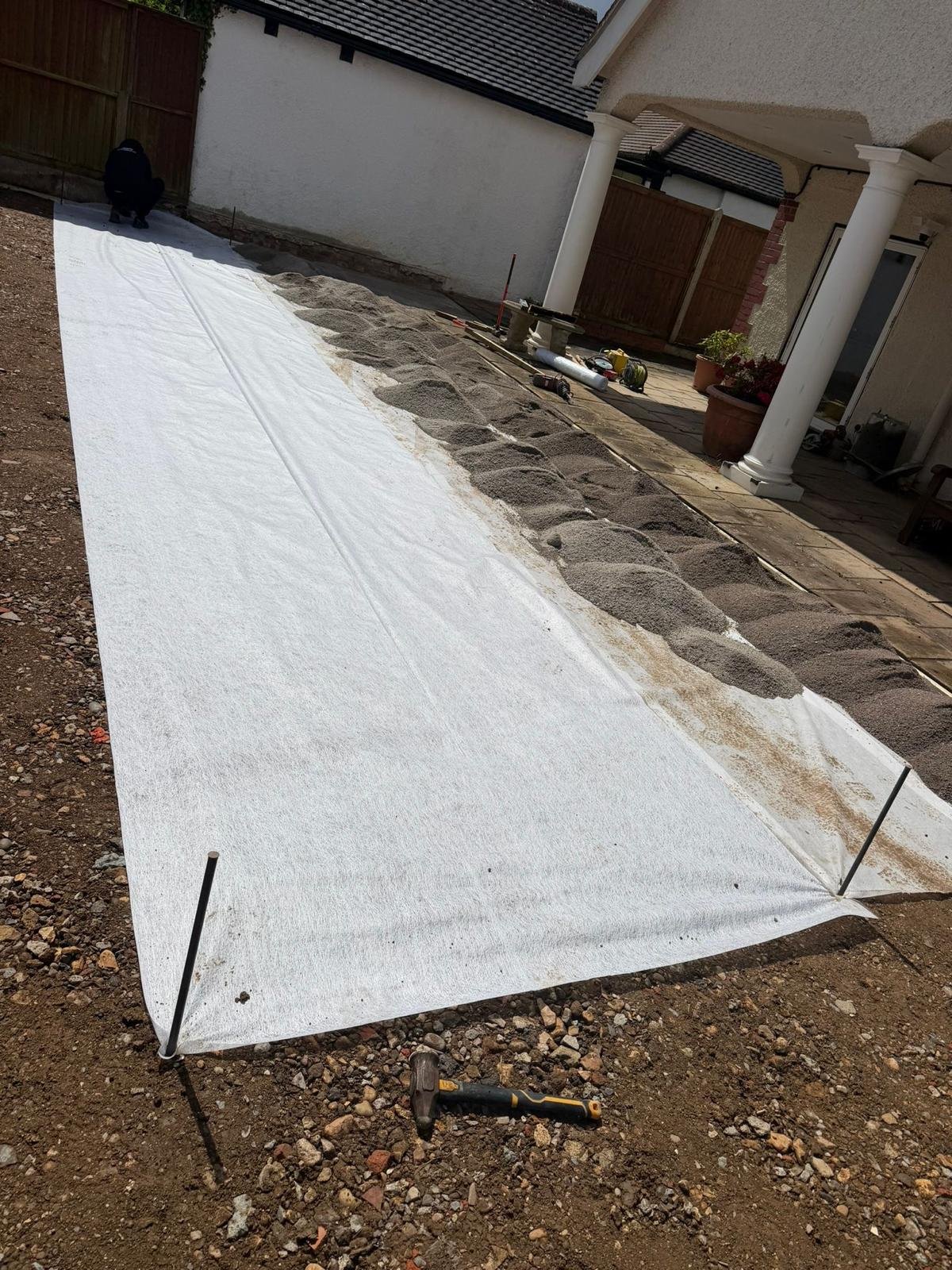
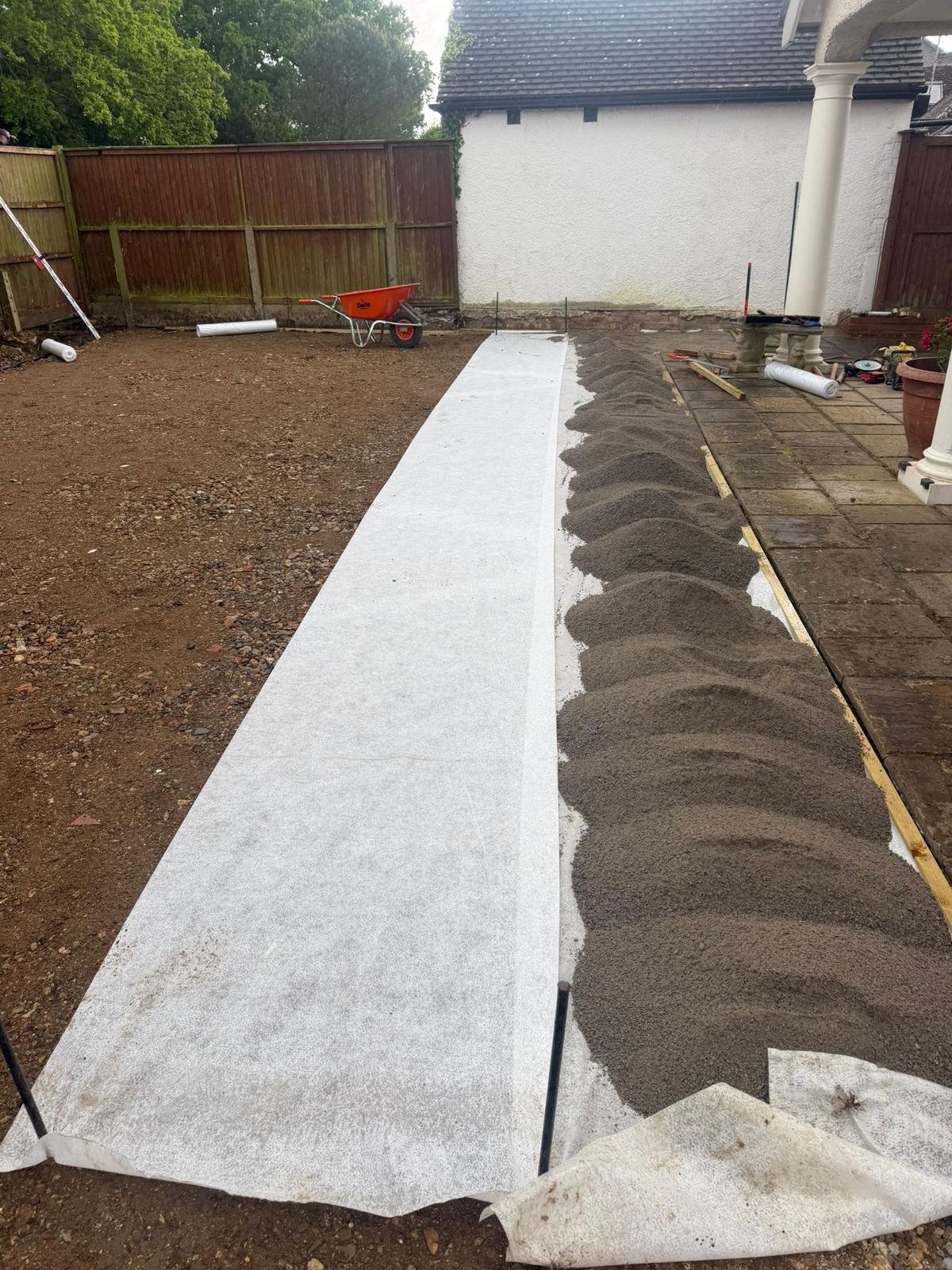
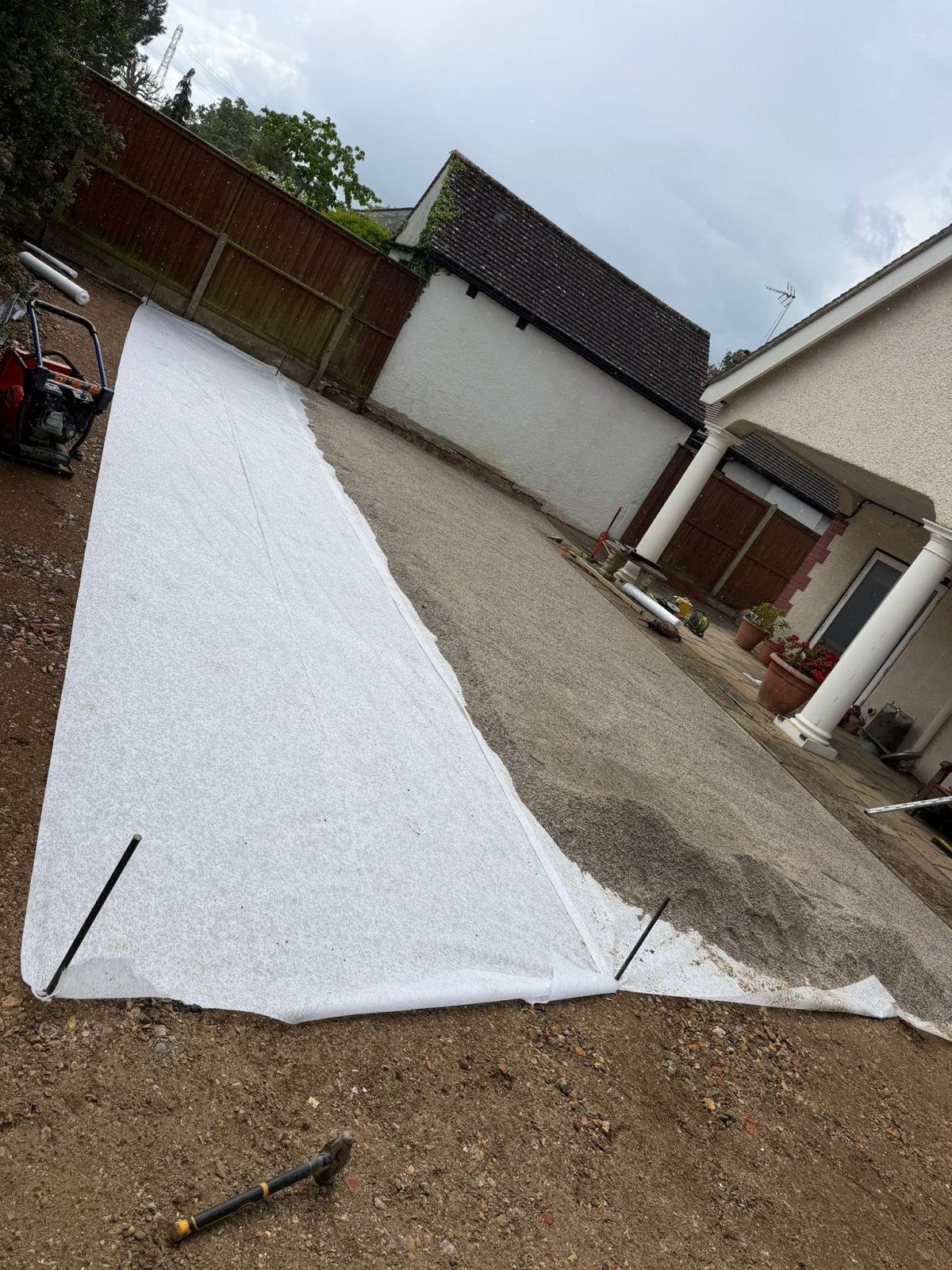
A permeable aggregate sub-base is laid and compacted in layers, building falls where needed to shed water correctly.
- 05
Sand blinding
A fine, compacted blinding layer is laid over the sub-base to create a smooth, even surface for the turf to sit on.
- 06
Turf laying and jointing
Turf is rolled out, joined seamlessly where widths meet, and trimmed precisely to edges, drains and features.
- 07
Securing and finishing
Turf is pinned at edges and joints, infill applied and brushed through, and the whole area checked for level and drainage.
Benefits
What you get for
the money you spend
No more mowing
Cuts out weekly mowing, feeding and watering entirely, freeing up time through spring and summer while keeping a consistently green lawn.
Years of stable use
A properly compacted sub-base keeps the turf flat and secure for years, without the sinking or rippling that shortcut installs suffer.
No re-lay costs
Correct excavation and drainage from the outset avoids paying again within a year or two to fix a rippling or waterlogged lawn.
Consistent, level surface
Sand blinding and careful compaction give an even surface underfoot, without soft spots, dips or hard ridges showing through.
Proper drainage built in
Permeable sub-base and correct falls mean rainwater drains through rather than pooling on the surface after heavy weather.
Low-maintenance for families
A durable, pet and child-friendly surface that stays usable in all weather, without muddy patches or bare worn areas developing.
In detail
Artificial grass in more detail
Artificial grass performance depends far more on ground preparation than on the turf brand chosen, though pile type and density matter for how an area feels and wears.
Turf types and pile
Turf pile height typically ranges from around 20mm to 40mm, with shorter piles suiting high-traffic family areas since they resist matting, and longer piles giving a lusher look for lower-use ornamental lawns. Density, measured by stitch rate, affects how full and durable the turf feels underfoot as much as pile height does.
Most modern turfs use a mix of straight and curled yarn fibres to mimic a natural lawn's texture and help the pile stand back up after use. Backing quality matters too: a well-made permeable backing lets water drain straight through the turf itself into the sub-base beneath.
Sub-base build-up
A typical build-up starts with excavation to around 100-150mm depth, followed by a compacted, free-draining aggregate sub-base such as MOT type 3, then a finer sand or granite blinding layer to give a smooth bed for the turf. Depth and material can vary depending on ground conditions and existing drainage.
On heavier clay soils or gardens with poor natural drainage, we sometimes increase sub-base depth or tie the area into existing drainage runs to stop water backing up under the turf. Skipping this step is the single most common cause of pooling and smell problems reported with cheaper installs.
Edging and joints
Edging, whether timber, composite or rigid plastic, retains the sub-base and gives turf edges something secure to pin into, stopping lift and movement over time. Where turf meets patios, decking or borders, edges are trimmed tight and pinned to leave a clean, finished line without visible gaps.
Joints between turf rolls are glued and taped from beneath so the seam sits flush and doesn't show or separate with use. Pile direction is matched across joints so light doesn't catch the seam and make it visible from different angles.
Play areas and pet-friendly options
For children's play areas, shock pad underlay can be added beneath the turf to cushion falls, particularly under climbing frames or trampolines, alongside the standard sub-base. This adds a soft layer without compromising drainage, provided the base beneath is still built correctly.
Pet-friendly turf specifications use denser, more resilient pile and permeable backing designed to let urine drain straight through rather than sitting on the surface, reducing odour build-up. Regular rinsing and occasional antibacterial treatment keeps pet-heavy lawns fresh between deeper cleans.
Residential and trade projects
Most installs are residential lawns, front gardens, and play areas where a family wants a durable, low-maintenance surface without the upkeep of real grass. Each is assessed on site since garden size, existing drainage, and ground type vary significantly across Potters Bar and the surrounding areas.
We also install artificial grass on commercial and communal plots, including show homes, communal gardens, and low-traffic amenity areas, where consistent appearance with minimal ongoing maintenance is the priority. Sub-base specification is adjusted for expected footfall on these larger areas.
Related services
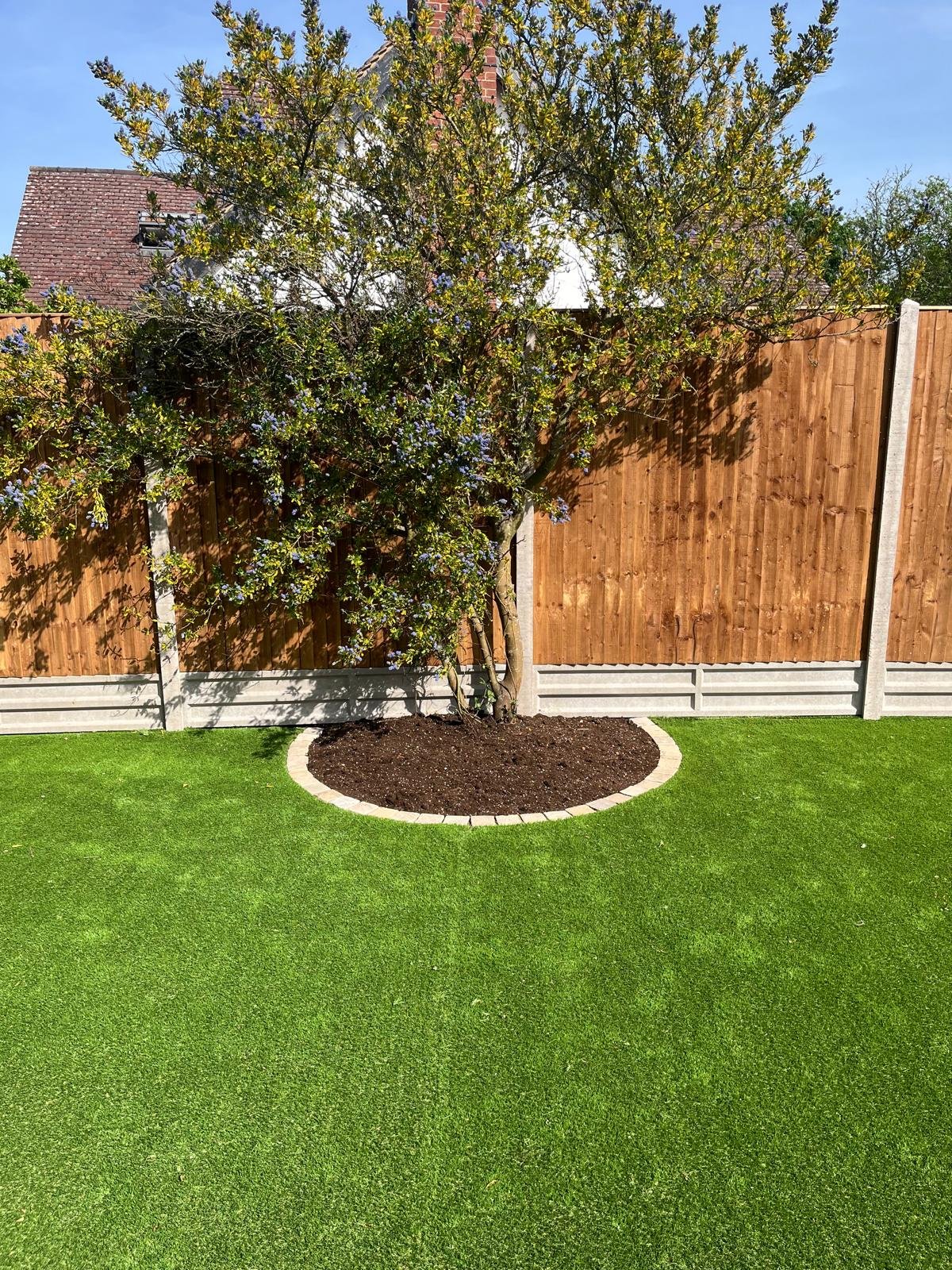
Landscaping
Full garden transformations that finish the job rather than leaving loose ends.
Read more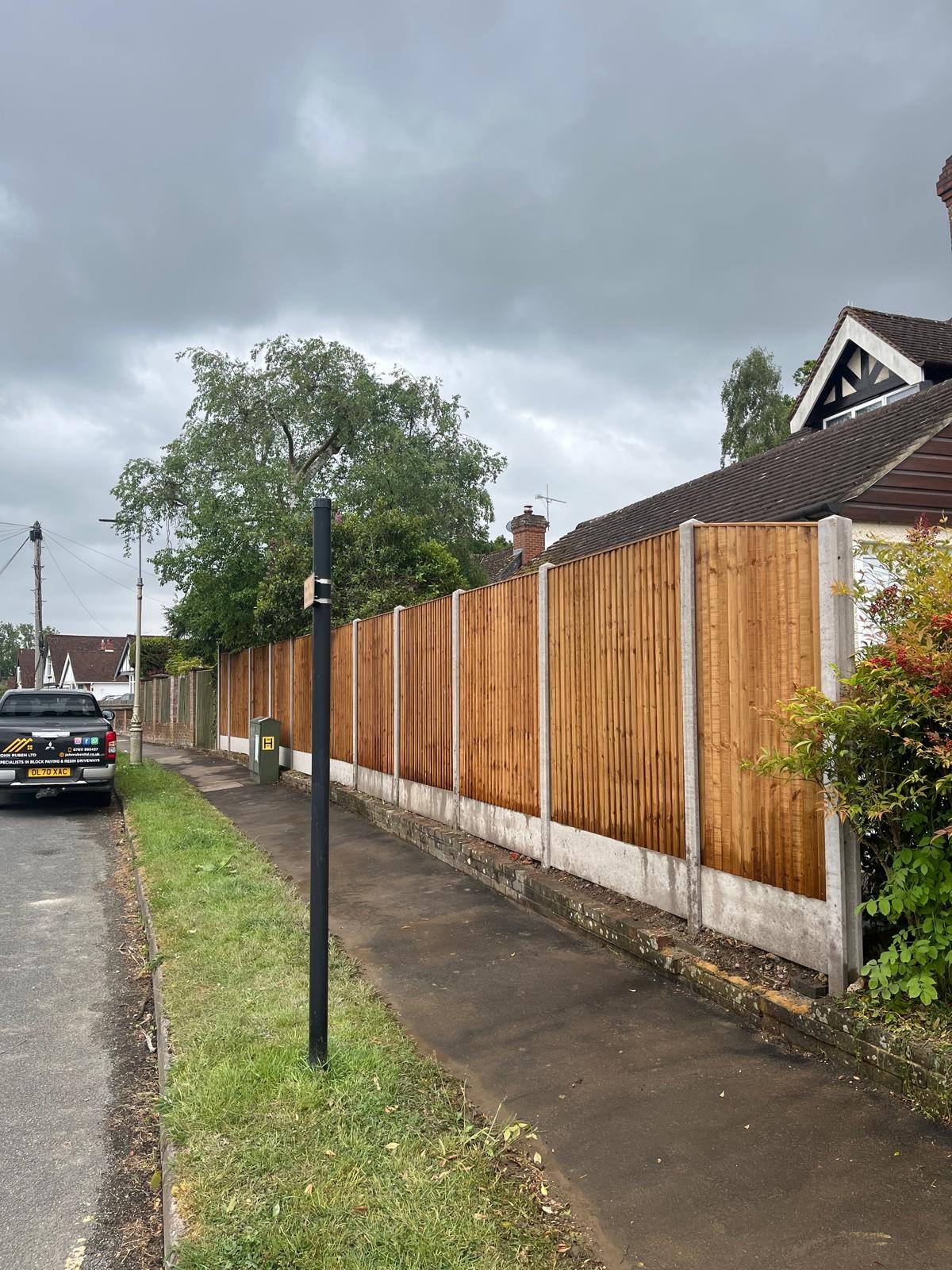
Fencing
Posts set properly, panels lined true, boundaries you don't think about again.
Read more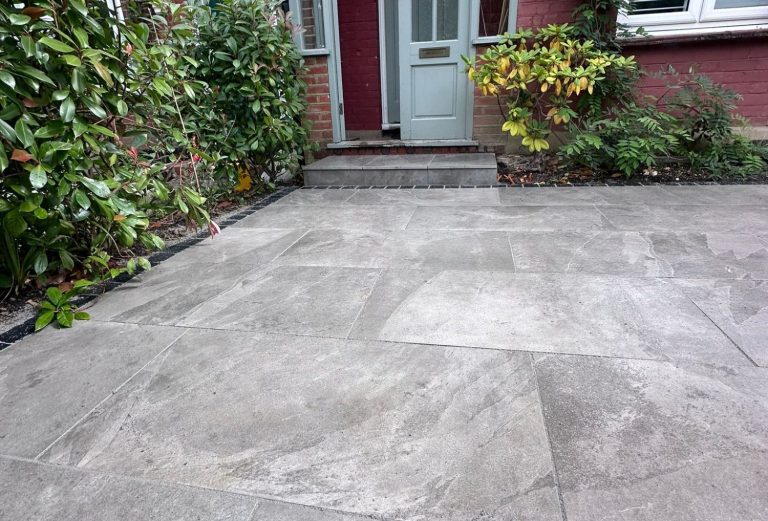
Patios
Porcelain, natural stone and paving laid level, tidy and made to last.
Read more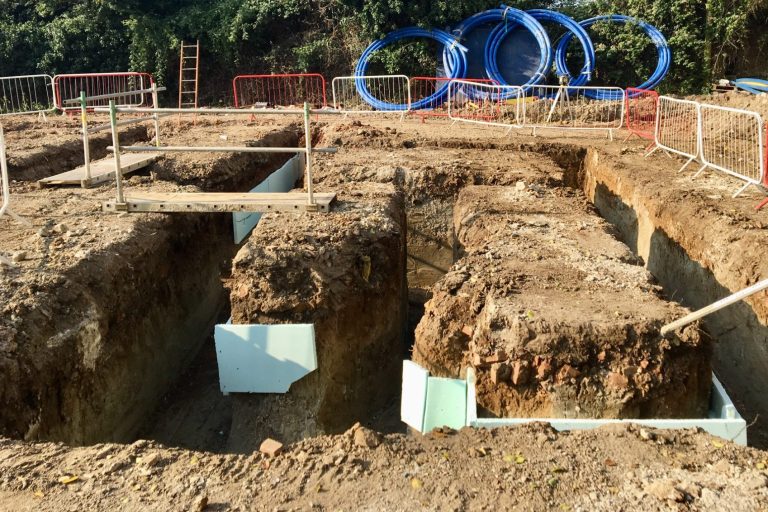
Groundworks
Excavation, muck away, sub-bases and site preparation for homeowners and builders.
Read moreArtificial Grass across our service areas
- Artificial Grass in Potters Bar
- Artificial Grass in Brookmans Park
- Artificial Grass in Hadley Wood
- Artificial Grass in Cuffley
- Artificial Grass in Cockfosters
- Artificial Grass in Totteridge
- Artificial Grass in Whetstone
- Artificial Grass in Mill Hill
- Artificial Grass in Barnet
Based in Potters Bar, working across south Hertfordshire and north London. See all our services or get in touch.
Common questions
Answers before
you call
- How much does artificial grass cost?
- Cost depends on area size, ground condition, sub-base depth needed, and turf specification chosen. We assess this properly at a site visit and give you a clear figure before work starts, rather than a fixed online price.
- How long does installation take?
- A typical residential lawn is completed within one to two days depending on size and existing ground condition, with larger or more complex areas taking longer. We confirm timescale after seeing the site.
- How long does artificial grass last?
- A properly installed lawn on a correctly compacted sub-base typically performs well for over a decade, depending on footfall, sun exposure and turf quality. Poor sub-base preparation is the main reason installs fail early.
- Does artificial grass need maintenance?
- Occasional brushing to keep the pile upright, clearing leaves and debris, and rinsing pet areas keeps the lawn looking fresh. It needs nothing like the mowing, feeding or watering a real lawn requires.
- Will it drain properly in heavy rain?
- Yes, when installed with a correctly compacted permeable sub-base and adequate falls, water drains straight through the turf and base rather than pooling on the surface, even in sustained rain.
- Can artificial grass go on a slope?
- Yes, sub-base depth and edging are adjusted to hold on sloped gardens, and turf is secured more heavily at the base of a slope to stop movement over time.
- Is artificial grass safe for children and pets?
- Yes, with a permeable backing and, where needed, a shock pad underlay for play areas, it gives a safe, consistent surface. Pet-specific turf specifications help manage odour on heavily used lawns.
- Do you remove the old lawn first?
- Yes, existing turf, topsoil and any old edging is excavated and cleared as part of the job before the new sub-base is built up, and the site is left tidy.
- Are you available for urgent enquiries?
- We take calls 24 hours, seven days a week, so you can reach us any time to arrange a site visit or ask about an existing installation.
- Do you cover areas near Potters Bar?
- Yes, alongside Potters Bar we regularly install artificial grass in Brookmans Park, Cuffley, Hadley Wood, Cockfosters, Totteridge, Whetstone, Mill Hill and Barnet.
Recent work
Ready for a lawnthat stays flat?
Call us for a site visit anywhere in Potters Bar or north London. We'll check the ground, plan the sub-base properly, and give you a clear price before anything is dug.
Established 2013 · 25+ years’ experience · 5.0 rated on Google · family-run · available 24 hours, 7 days