
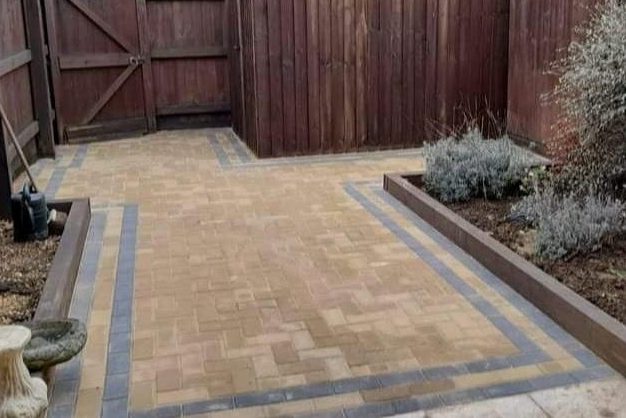
Block Paving in Potters BarLaid Right, on a Sub-Base That Lasts
A block paved driveway that stays flat, drains properly and doesn't shift within two winters comes down to what's under the blocks, not the blocks themselves. We excavate to the right depth, compact in layers and lay to falls so water goes where it should, with a site visit to confirm scope before any work starts.
Rated 5.0 on Google · family-run in Potters Bar since 2013
Est. 2013
Trading in Potters Bar for over a decade
25+ years
Hands-on groundwork and construction experience
5.0 rating
On our Google Business Profile
Family-run
John and Amy Quinn, not a call centre
Available 24/7
Call any day and speak to the people doing the work
Overview
What block paving involves
Block paving is a modular hard-standing surface built from concrete or clay blocks laid in a bed of sharp sand over a compacted sub-base. It's used for driveways, parking areas, paths and patios where you want a durable surface with a defined pattern, edge kerbs and the option to lift and relay a section if you ever need access underneath for a pipe or cable repair.
It suits homeowners who want a driveway that looks tidier than tarmac, comes in a choice of colours and laying patterns, and can be repaired block by block rather than needing a full resurface. It's also common where a property has an existing block driveway that's sunk, weeds through the joints, or needs extending to fit a second car.
Block paving depends almost entirely on groundwork done before a single block goes down. If the sub-base isn't excavated deep enough, isn't compacted in the right layers, or the falls aren't set correctly, the surface will move, pond water or crack at the edges within a season or two. That's the part a professional groundworker controls that a DIY job or a paving-only contractor often skips.
Modular and repairable
Individual blocks can be lifted and relaid if ground moves or access is needed, unlike a poured surface you'd have to break out.
Pattern and colour choice
Herringbone, basketweave or stretcher bond in a range of block colours and edging options to suit the property.
Built on groundwork, not looks
Longevity comes from sub-base depth, compaction and drainage falls set correctly before laying begins.
What happens if it waits
Where block paving goes wrong
Most block paving failures aren't the blocks' fault. They're a sub-base that was too shallow, compaction skipped to save time, or a driveway laid flat with no fall so water sits and works its way into the joints. We see this a lot on driveways relaid by contractors who priced the job on blocks alone.
Sinking and rutting
Under compacted sub-base settles under vehicle weight, leaving wheel-track dips that get worse every time it rains and softens the ground further.
Standing water
No fall built in means puddles form on the surface, which then push water sideways into joints and eventually the sub-base beneath.
Edge and joint failure
Blocks without a proper haunched edge restraint creep outward over time, opening gaps that let sand and grit wash out from between blocks.
Common mistakes we get called out to fix
- Laying blocks over old tarmac without checking what's underneath
- Skipping the geotextile membrane between sub-base and sand
- Compacting in one thick layer instead of stages
- No edge restraint or kerb along open boundaries
- Ignoring existing drainage and damp-proof course levels
- Using kiln-dried sand jointing on a badly cut, gappy layout
Our process
How the job
actually runs
The same sequence on every job, with one point of contact from the first site visit to the final sweep down.
- 01
Site visit and survey
We assess ground conditions, existing levels, damp-proof course height and drainage before quoting, so the price reflects the actual site.
- 02
Excavation
Dig out to the depth needed for sub-base, sand bed and block thickness, removing spoil and checking for services below ground.
- 03
Sub-base and compaction
MOT Type 1 or equivalent laid in compacted layers to the depth the design calls for, tested for stability before moving on.
- 04
Edge restraints
Concrete haunching or kerb units set along all open edges to stop blocks spreading under load once traffic starts.
- 05
Sand bed and laying
Screeded sharp sand bed, blocks laid to the agreed pattern with correct falls away from the property towards drainage.
- 06
Cutting and finishing
Blocks cut to fit edges and features, whacker compacted into the sand bed to lock the surface together.
- 07
Jointing and sweep-in
Kiln-dried sand brushed into joints and vibrated in, surface swept and inspected before we hand it back to you.
Benefits
What you get for
the money you spend
Fast turnaround
Most domestic driveways are excavated, built up and laid within days rather than weeks, minimising disruption to your access.
Built to last
Correct sub-base depth and compaction stages mean the surface carries vehicle weight without rutting or sinking for years.
Avoids future cost
Getting the groundwork right the first time avoids the far higher cost of digging out and rebuilding a failed driveway later.
Repairable, not replaceable
Individual blocks lift and relay cleanly if you need access below ground, rather than breaking out a whole panel.
Proper drainage built in
Falls are set during laying so surface water runs to soakaways or drains rather than pooling against the house.
One point of contact
We handle excavation, sub-base, drainage and laying ourselves rather than passing the groundwork to a separate contractor.
In detail
Materials, methods and situations
Block paving covers a range of materials and approaches depending on the site, the vehicle loads it needs to carry and how it ties into existing drainage and boundaries.
Concrete vs clay blocks
Concrete blocks are the most common choice for driveways because they're consistent in size, available in a wide colour range and cost less than clay. They're manufactured to a standard thickness for pedestrian or trafficked use, and most suppliers offer a permeable version with wider joints for SuDS-compliant drainage on new or altered driveways.
Clay pavers cost more but hold their colour better over time since the colour runs through the material rather than sitting on the surface. They suit period properties or where a client wants a traditional look that won't fade. Both types are laid using the same sub-base and jointing principles; the difference is largely aesthetic and budget-driven.
Sub-base depth and ground conditions
The depth of sub-base needed depends on what the surface will carry and what the existing ground is like. A pedestrian path needs less than a driveway taking two family cars, and clay or soft ground needs a deeper sub-base than firm, well-drained soil to spread the load properly.
We test and adjust on site rather than applying a blanket depth to every job. This is one of the main reasons a fixed online quote for block paving is unreliable: the same size driveway on two different sites can need very different amounts of sub-base material and excavation.
Permeable block paving and drainage rules
Since planning rules changed, any new or replacement driveway over five square metres at the front of a house needs to either use permeable materials or direct water to a permeable area, rather than straight to the road. Permeable block paving uses a wider joint filled with fine aggregate that lets water pass through into a permeable sub-base below.
This isn't just a compliance box to tick; it genuinely reduces water sitting on the surface and pushed towards the house. We design the sub-base and jointing to suit whichever route is right for your site, and can talk through the options at the initial visit.
Patterns, borders and mixed surfaces
Herringbone patterns interlock more strongly under vehicle turning movements than stretcher bond, which is why it's the standard recommendation for driveways rather than basketweave, which suits patios and paths better. A contrasting border course also helps define the edge of the drive and gives a cleaner line against lawn or planting.
It's common to combine block paving with another surface: a resin bound path leading to the front door, or a block border framing a larger area of another material. We can design and build combined surfaces as one job rather than you coordinating separate contractors.
Residential driveways vs commercial and trade work
Domestic driveways are designed around car and occasional van loads, with sub-base depths and edge restraints set accordingly. Commercial or shared access areas taking regular heavier vehicles need a thicker sub-base and often a different block specification rated for higher loads, plus consideration of turning circles and wear patterns.
We take on both residential driveways and commercial or trade groundwork, from a single household drive in Potters Bar to a parking area for a small commercial site, adjusting the specification to the actual use rather than a one-size approach.
Related services
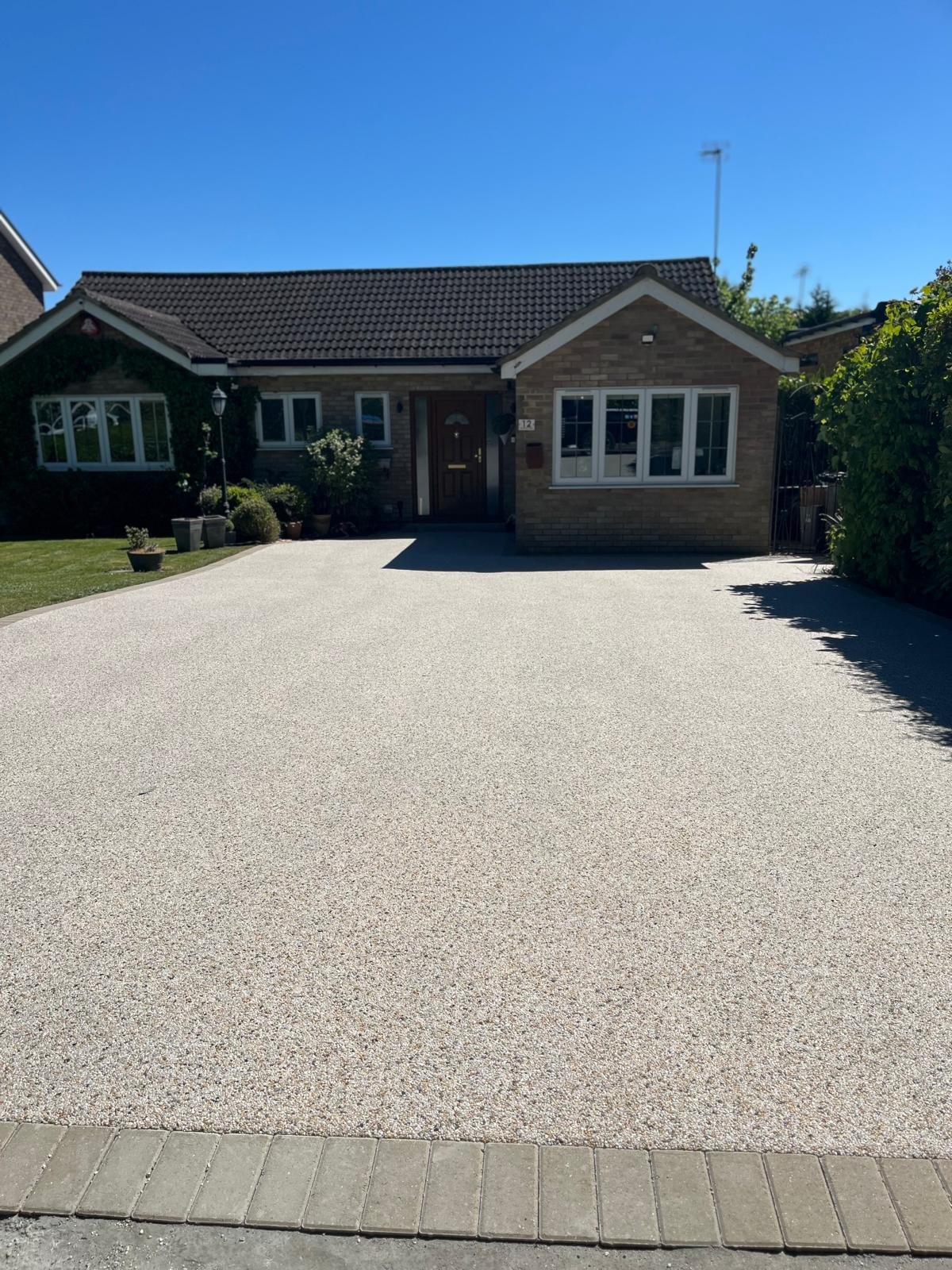
Resin Bound Driveways
Permeable, seamless and built on a properly excavated, drained base, not laid over guesswork.
Read more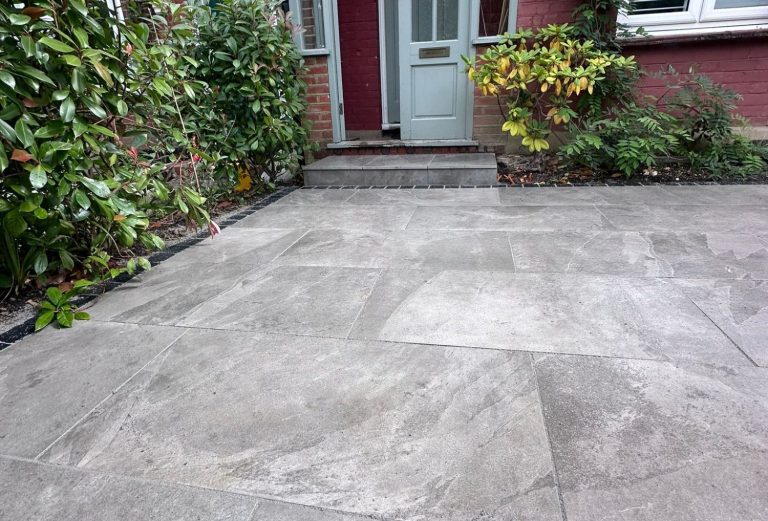
Patios
Porcelain, natural stone and paving laid level, tidy and made to last.
Read more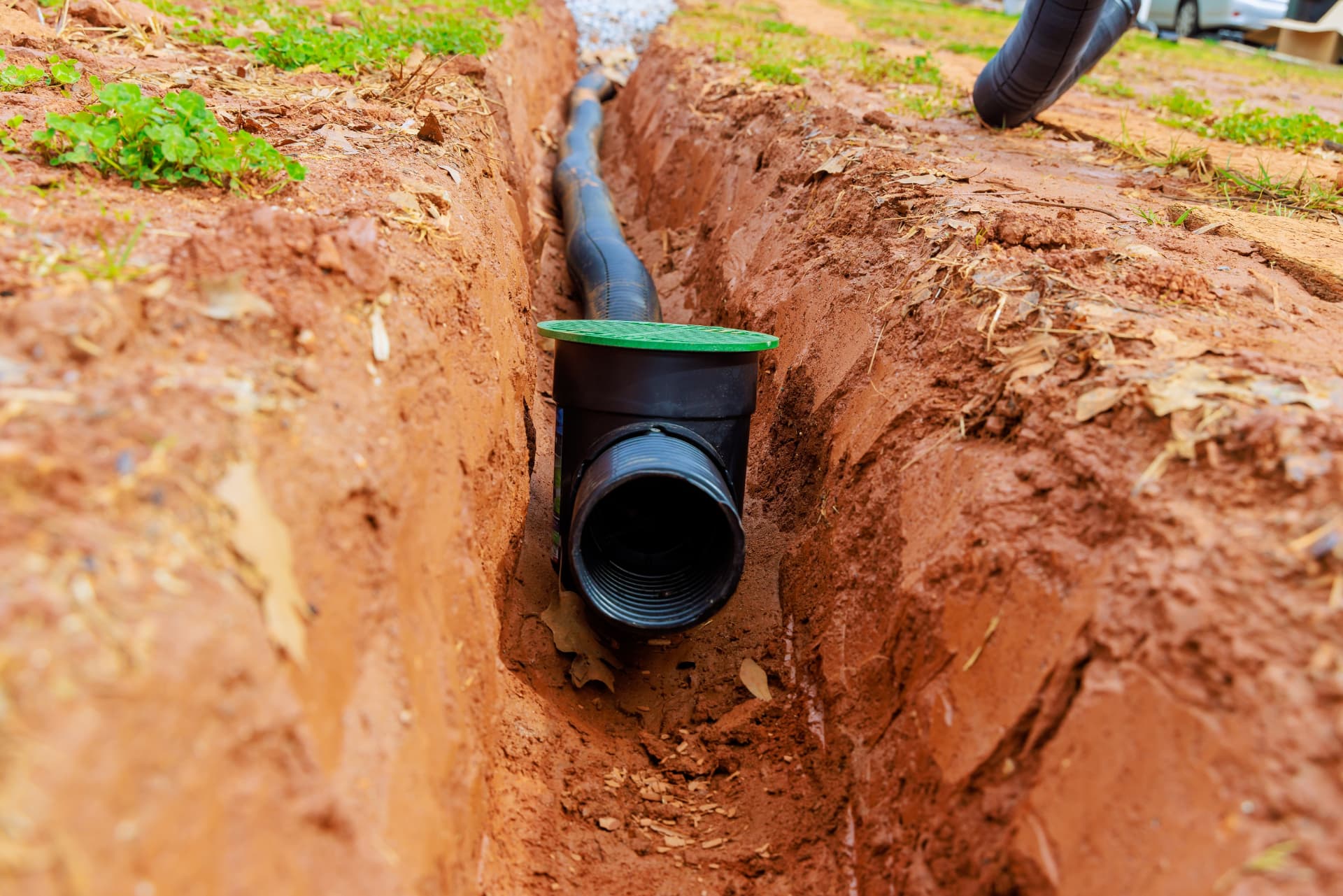
Drainage
Channels, soakaways and surface water solutions designed in from the start.
Read more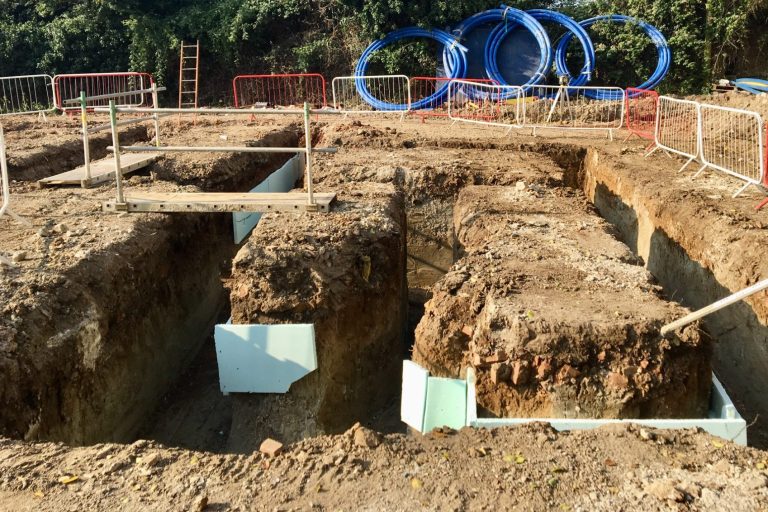
Groundworks
Excavation, muck away, sub-bases and site preparation for homeowners and builders.
Read moreBlock Paving across our service areas
- Block Paving in Potters Bar
- Block Paving in Brookmans Park
- Block Paving in Hadley Wood
- Block Paving in Cuffley
- Block Paving in Cockfosters
- Block Paving in Totteridge
- Block Paving in Whetstone
- Block Paving in Mill Hill
- Block Paving in Barnet
Based in Potters Bar, working across south Hertfordshire and north London. See all our services or get in touch.
Common questions
Answers before
you call
- How much does block paving cost?
- It depends on the area, ground conditions, existing drainage and the block chosen, so we don't quote a figure without seeing the site. A visit lets us assess excavation depth and any complications so the price reflects the actual job, not an estimate from a photo.
- How long does a block paving driveway take?
- Most domestic driveways take a matter of days from excavation to finished jointing, depending on size and access. Weather can affect the sand bed and jointing stages, and we'll give you a realistic timeframe once we've surveyed the site.
- Do I need planning permission for a block paved driveway?
- Generally no, provided the surface is permeable or drains to a permeable area rather than straight to the road, which is the standard rule for front driveways over five square metres. We can talk through what applies to your specific property.
- How long does block paving last?
- Properly built on a compacted sub-base with correct edge restraints, block paving lasts many years and can be relaid or repaired section by section rather than replaced outright. Lifespan depends on ground conditions, drainage and the loads it carries day to day.
- Can block paving be repaired instead of replaced?
- Yes, that's one of its advantages over a poured surface. Sunken or damaged blocks can usually be lifted, the sub-base corrected underneath, and the same blocks relaid, provided the base issue is fixed rather than just patched over.
- What maintenance does block paving need?
- An occasional sweep and jet wash keeps joints and surface clear, and topping up jointing sand every few years stops weed growth and keeps blocks locked together. It's low maintenance compared with a lawn or gravel driveway.
- Do you cover areas near Potters Bar?
- Yes, alongside Potters Bar we regularly work in Brookmans Park, Cuffley, Hadley Wood, Cockfosters, Totteridge, Whetstone, Mill Hill and Barnet, and take on groundwork jobs across north London and Hertfordshire.
- Are you available for urgent enquiries?
- We take calls 24 hours a day, seven days a week. If you've got a driveway issue that needs looking at urgently, or just want to book a site visit, call any time and we'll arrange a time to come and assess it.
- Can you match an existing block paving pattern?
- In many cases yes, if the block is still available or a close match can be sourced. Where an exact match isn't possible we'll talk through options such as a contrasting border to make an extension look intentional rather than mismatched.
- Will block paving cope with heavy vehicles?
- It can, provided the sub-base and block specification are designed for that load from the start. Tell us at the site visit if the driveway needs to take anything heavier than standard cars, such as a van or motorhome, so we can size the build-up correctly.
Get a Block Paving QuoteBacked by a Proper Site Visit
Call us any time, day or night, to arrange a free site visit. We'll assess your ground, talk through block and pattern options, and give you a price based on what your driveway actually needs.
Established 2013 · 25+ years’ experience · 5.0 rated on Google · family-run · available 24 hours, 7 days